Slow Trains of Europe
The West Highland Line: Glasgow to Mallaig
A railway built across bog and moor, with a high station and a concrete viaduct. The distance matters less than how the line gets there.
- Length
- about 264 km to Mallaig
- Usual time
- about 5 hours
- Travelled
- by train
Glasgow Queen Street is where the line begins. From there, the railway runs towards Fort William and Mallaig, with Oban also on its route. The names promise a long journey; the engineering gives it substance.
This is not a railway that simply crosses empty ground. Across Rannoch Moor, the track was laid on a floating bed of brushwood, turf and ash over the bog. The construction story is the part that stays with me. A route across difficult ground makes a stronger case than scenery alone.
Brushwood, turf and ash are unshowy materials. Their importance is obvious here: they hold the line across bog. I prefer this practical detail to an easy account of wildness. The landscape is not just scenery; it shaped the railway’s construction.
The railway opened to Fort William in 1894. It was extended to Mallaig in 1901. Those dates put the line’s reach in perspective: the way west was built in stages, not delivered all at once.
The numbers: about 264 km to Mallaig; about 5 hours; by train.
That is a considerable stretch of railway, and five hours is not a quick outing. I would not treat the time as an inconvenience to be beaten. The route is the point, and the slow progress across the landscape belongs to the experience.
The route is the point, and the slow progress across the landscape belongs to the experience.
Corrour stands at about 408 m, making it the highest station on the British main line network. It has no public road access. That pair of facts is enough to make the stop feel different from an ordinary station, without inventing a story around it.
Remote stations can become a travel writer’s excuse for grand claims. Corrour needs none. Its height and lack of public road access already say plenty about the line’s relationship with the ground it crosses. My thermos of tea seems a sensible companion to that kind of journey.
At Corrour, the lack of road access is not an embellishment. It is a plain fact that changes how the station reads. The elevation already gives it a clear place in the line’s story.
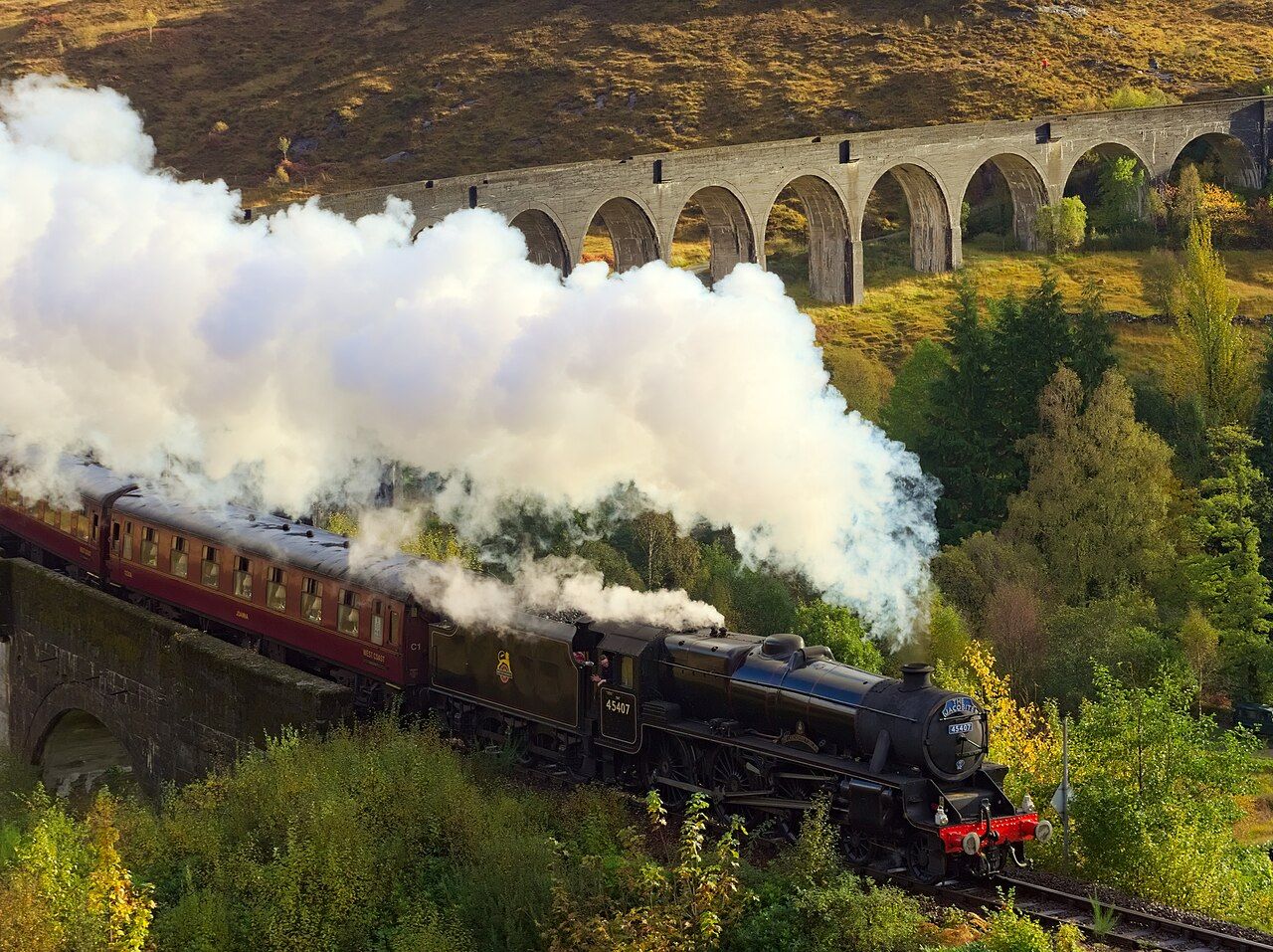
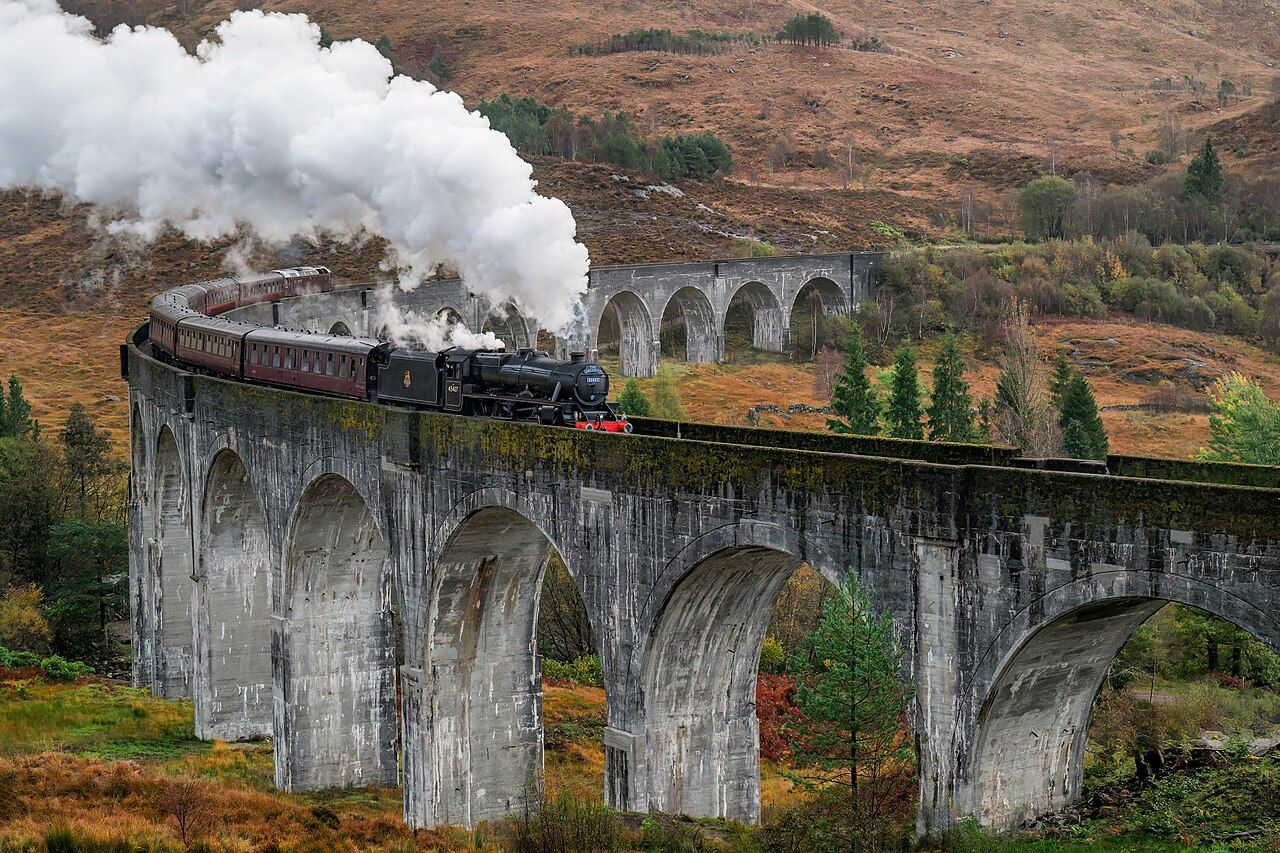
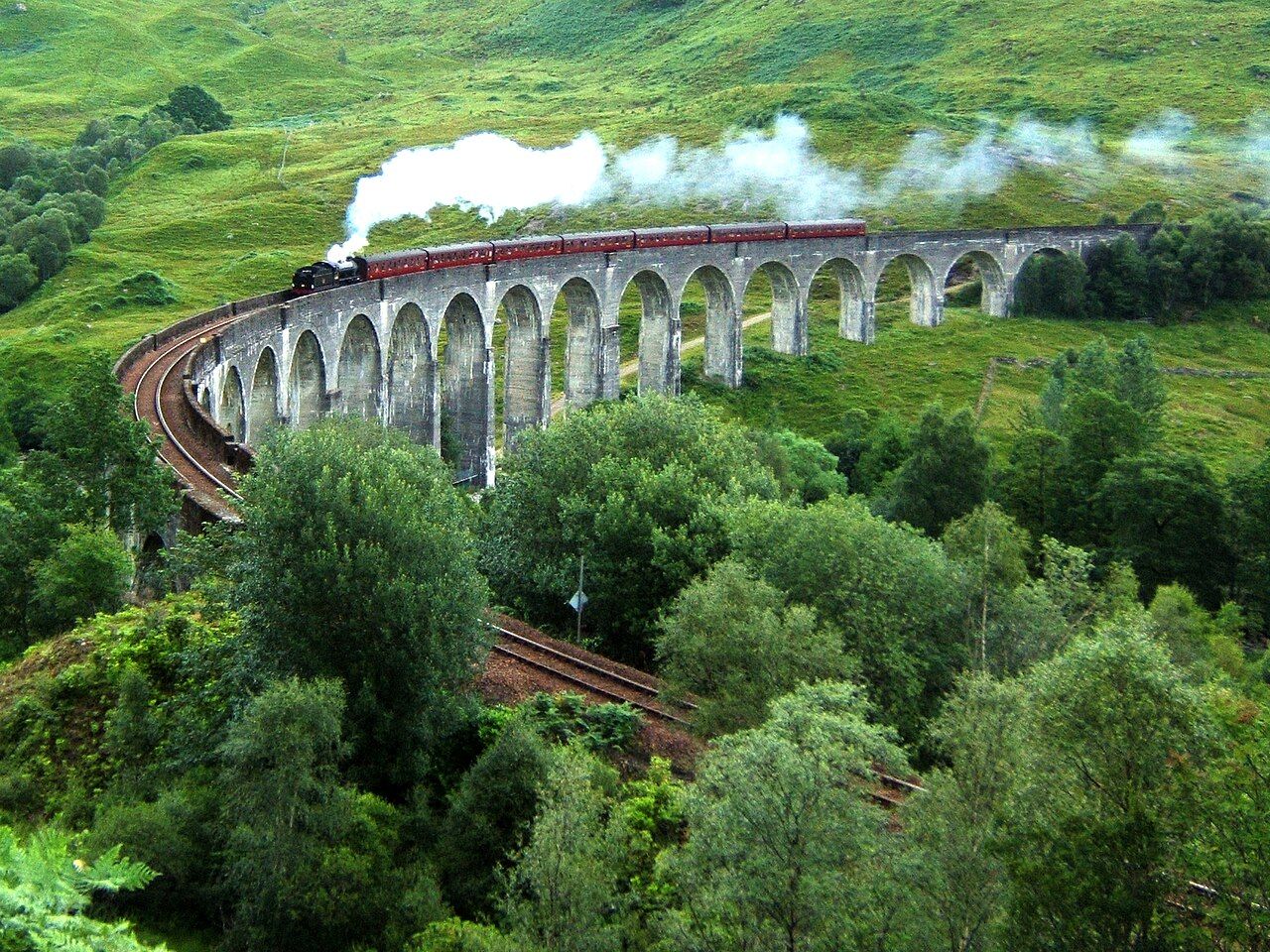
Then comes the Glenfinnan Viaduct. It has 21 arches and was built of mass concrete. That is a more interesting introduction than any grand flourish: the structure is practical, sizeable, and tied directly to the railway’s route.
The line’s construction earns its place in the story because it explains the journey. Rannoch Moor required a floating track bed; the viaduct required mass concrete. These are not decorative details added afterwards. They are the means by which the railway crosses the ground.
There is a temptation to reduce a railway journey to a list of famous views. This line resists that approach. Its interest lies just as much in the things the builders had to solve, and in the distance between Glasgow and the far end at Mallaig.
ScotRail runs the regular passenger trains on the West Highland Line. That is the practical shape of the route today, while the older story remains visible in its stages: Fort William in 1894, Mallaig in 1901.
The Glenfinnan Monument stands at the head of Loch Shiel. It was raised in 1815 in memory of the 1745 Jacobite rising. The railway and monument meet in the same part of the story, but they mark different histories. Keeping those histories distinct makes the stop more interesting, not less.
From Mallaig, a ferry crosses to Armadale on the Isle of Skye. The railway therefore reaches a useful edge, rather than ending as an isolated line on a map. The link to the ferry gives Mallaig a clear role in the journey.
The route keeps offering contrasts without needing a grand pitch. A bog needs a floating bed; a station sits high without road access. At the far end, the ferry carries the journey onwards. That sequence gives the line a practical shape, not merely a scenic one.
I like that this route does not depend on one headline feature. Corrour has the altitude and isolation; Rannoch Moor shows the ingenuity beneath the track; the viaduct makes the engineering visible. Together they give the railway more than a single photo opportunity.
A thermos of tea suits the length of it. So does accepting that five hours is part of the arrangement, not a flaw to excuse. I would take the time over a hurried account of the famous structures.
For me, the West Highland Line is worth the hours because its engineering matters as much as its views.