Mountain & Coast Paths
The GR20 across Corsica: a hard line through granite
A demanding crossing from Calenzana to Conca, split at Vizzavona between rough northern ground and a gentler southern half.
- Length
- about 180 km
- Usual time
- 15-16 days
- Travelled
- on foot
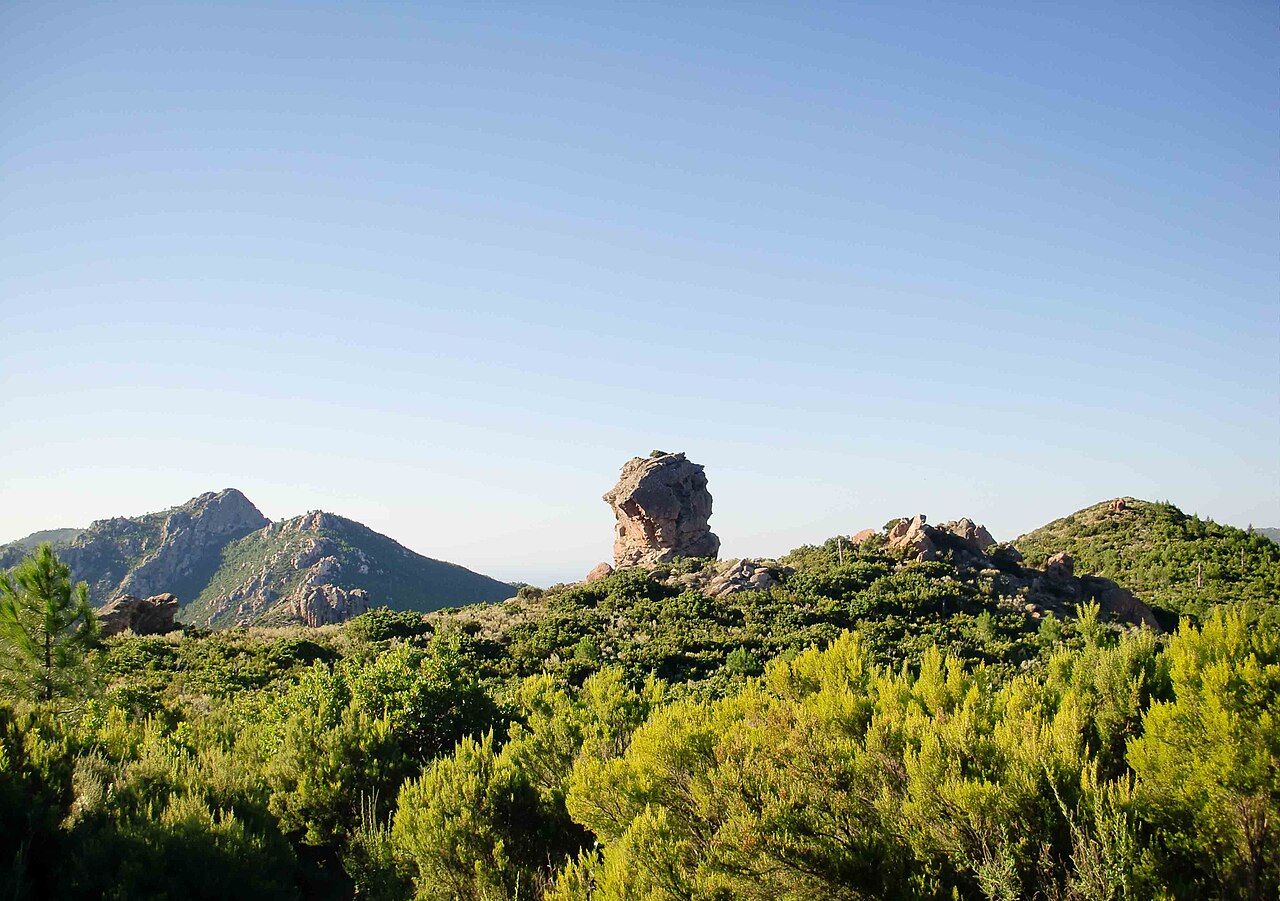
Granite gives the GR20 its hard, spare character. The path crosses Corsica from Calenzana to Conca, following the island’s spine.
That line is easy to understand and harder to reduce to a number. The distance sounds manageable; the ascent makes the useful comparison.
It is a walk of contrasts, not a single sustained ordeal. Vizzavona, roughly halfway, divides a rockier northern section from a gentler southern one. That split gives the route its clearest shape.
The change of ground matters more than a neat division on a map. Vizzavona marks a change in the route’s character, not a verdict on either half.
The north asks for respect; the south gives the legs room.
The north asks for respect; the south gives the legs room.
The numbers: about 180 km, about 15 or 16 stages, and more than 10,000 m ascent.
That distance is a poor measure of effort. The GR20 is not a path to judge by kilometres alone.
GR stands for Grande Randonnée, the French network of long-distance footpaths. The name sounds orderly; the ground asks more of the walker. Most of the route lies within the Parc naturel régional de Corse, created in 1972.
The thermos of tea is my preferred measure of a long walk. On this route, the numbers suggest a careful pace, not a dash. The northern half seems the more compelling proposition, but it is also where the route’s demands are hardest to ignore.
The northern half
North of the route, Monte Cinto rises to 2,706 m, the highest mountain in Corsica. The GR20 does not need a summit claim to feel mountainous. Its rockier northern section already gives the crossing its strongest character.
The northern section is where the GR20 makes its strongest argument. I like that it does not disguise the cost of its appeal. The route’s reputation is not enough by itself; its shape is.
There is a reason to take the route’s history seriously. In June 2015, a rockfall in the Cirque de la Solitude killed seven walkers. The route was later moved away from that gully.
That change belongs in any honest account of the GR20. It is part of the route as it stands, and a reminder that a path can change for reasons beyond taste.
The northern half is the section I would give most attention. Its rockier character makes the crossing feel more distinctive, though not necessarily more enjoyable at every moment. Hardness alone is a thin reason to choose a walk.
There are other long routes to weigh against it: the mountain coast of Lycia, the round of Mont Blanc, and high route through the Dolomites. The GR20 makes its case through the shape of Corsica, rather than through a tidy claim of superiority.
Its appeal lies in that blunt division between rough north and gentler south. A long walk needs changes of mood as much as distance. Vizzavona supplies the dividing line without making either half feel like an afterthought.
The southern half
South of Vizzavona, the terrain is gentler. That is a useful distinction, not a promise of easy walking. The total ascent remains more than 10,000 m, and the full route still asks for time.
Even the southern half has a place in the crossing’s logic. Gentler ground alters the tone, keeping the journey from being one long test of the same kind. That variation is a better reason to walk the whole line than any claim about toughness.
For a walker choosing between the halves, the south makes a more measured introduction. The north is the more convincing test of the route’s character. Neither half tells the whole story without the other.
The usual walking season runs from June to early October, when the high passes are free of snow. That window gives the crossing a clear seasonal shape. It also makes timing part of the route’s character, rather than a minor detail after the decision.
There is little value in pretending every stage will feel equally rewarding. The figures point to sustained effort, while Vizzavona offers a natural way to think about the journey. I prefer a route that admits its shifts to one sold as a single, seamless experience.
The GR20 earns its place through contrast: granite, ascent, and a genuine change of pace. It is demanding, but not merely difficult for difficulty’s sake. The northern half stays with me most.
At the end, the thermos is still in hand. The line across Corsica has done enough; no grand verdict is needed.