Rivers & Canals
The Caledonian Canal: locks, lochs and a safer passage
Thomas Telford’s canal joins natural lochs with a chain of locks. Its scale is impressive; the changing balance between cut water and open loch is the real draw.
- Length
- about 60 miles
- Usual time
- about 1 week
- Travelled
- by boat
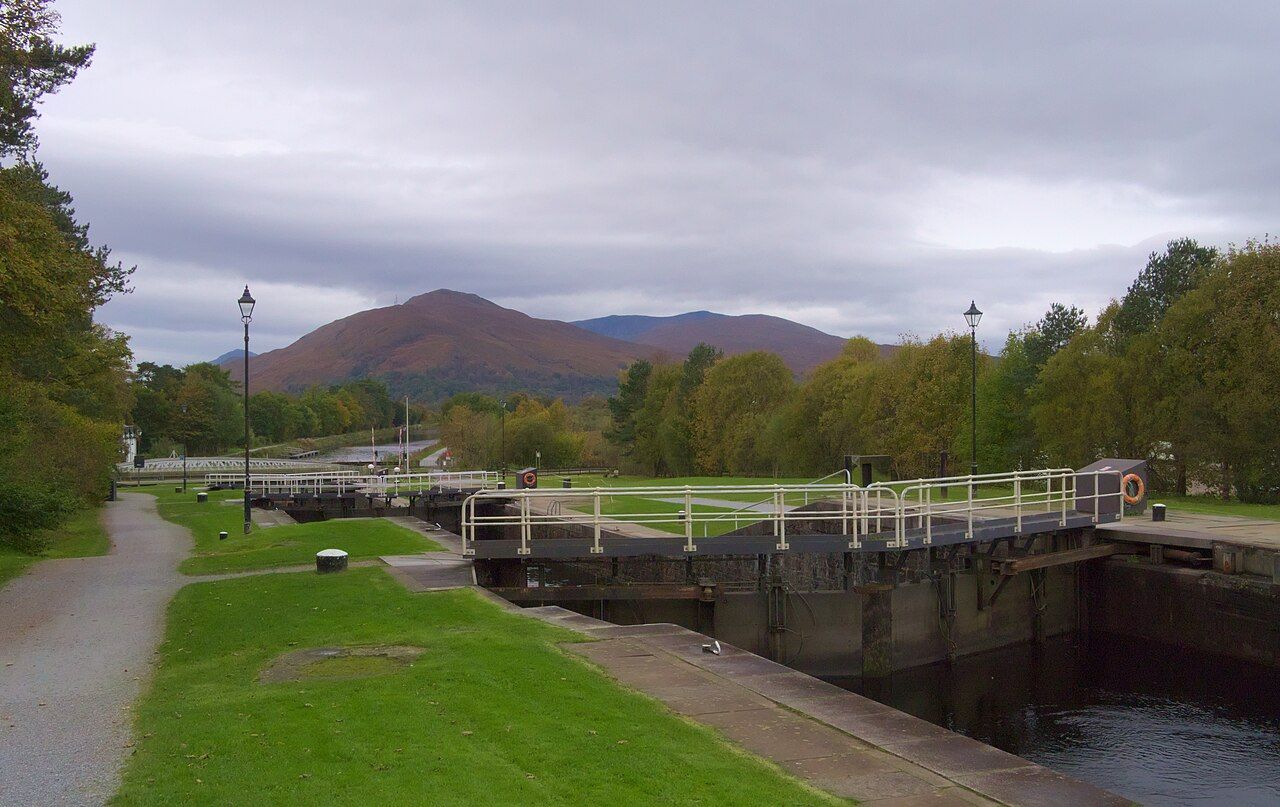
About 60 miles separate Corpach near Fort William from Inverness. The Caledonian Canal makes that distance feel measured, not hurried. Thomas Telford engineered it, and it opened in 1822. Its purpose was practical: a safer route for ships than passage around Scotland’s north.
The first surprise is how little of the route is cut. Only about a third is man-made; natural lochs carry the rest. That gives the canal a character unlike a long, continuous trench. The engineering matters, but so does the water already here.
There is a useful rhythm in that combination. Locks gather the journey into deliberate stages, then the lochs open it out again. I prefer that alternation to a route made entirely of engineered edges. The canal keeps changing its terms.
The numbers: about 60 miles, 29 locks, about a week by boat.
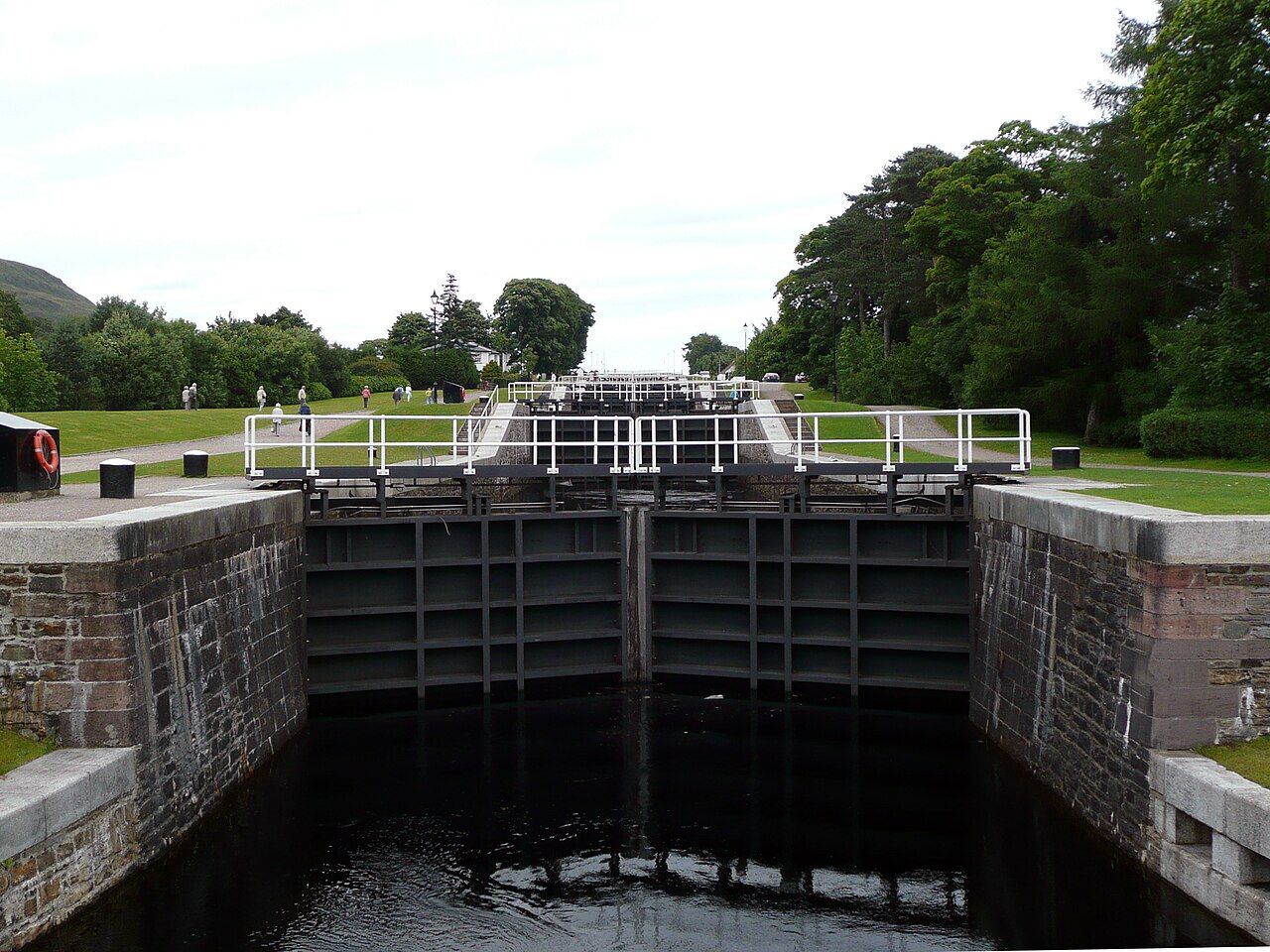
Neptune’s Staircase at Banavie is the most forceful statement of the canal’s engineering. It is a flight of eight locks, enough to make the route’s working purpose plain. Ships needed a safer passage, and this is not decorative infrastructure. The scale makes its case without help.
Still, the locks are not the whole story. A count of 29 can make the canal sound like one long sequence of gates. The natural lochs prevent that impression from holding. They give the passage room between its engineered sections.
At Fort Augustus, a flight of five locks climbs through the village. The setting makes this section feel different from Neptune’s Staircase. Here, the canal’s movement passes through a settled place, rather than standing apart as a single large work.
Loch Oich is the summit of the canal. That fact gives the route a clear centre, even when the journey itself is mostly a succession of stages. It is a useful point to hold in mind while the locks and lochs keep trading places.
For a land-based view of the same broad passage, a towpath walk to Inverness gives the canal another sort of pace. The boat is the route’s stated way through, but walking changes what counts as progress. I like that the water does not insist on one reading.
Telford’s work also invites comparison beyond this canal. Telford's aqueduct in Wales points towards another answer to difficult ground. This canal is less about one astonishing structure than a whole route, carefully joined to natural lochs.
That makes it less immediately dramatic than a single landmark, and more satisfying over distance. The canal’s achievement is cumulative: locks, lochs, then another stretch of managed water. My thermos of tea suits that patient scale better than a hurried itinerary.
There is a wider family resemblance here, too. Riquet's southern French canal suggests how differently a canal can occupy a landscape. The Caledonian Canal earns its place through its mix of natural water and engineering, not through spectacle alone.
The best thing about the Caledonian Canal is its changing balance: lochs first, engineering close behind.