Rivers & Canals
The Canal du Midi: Riquet’s Canal
About 240 km from Toulouse to the Étang de Thau, the Canal du Midi is a work of patience, remarkable locks and plane trees struck by disease.
- Length
- about 240 km
- Usual time
- 1-2 weeks
- Travelled
- by boat or bicycle
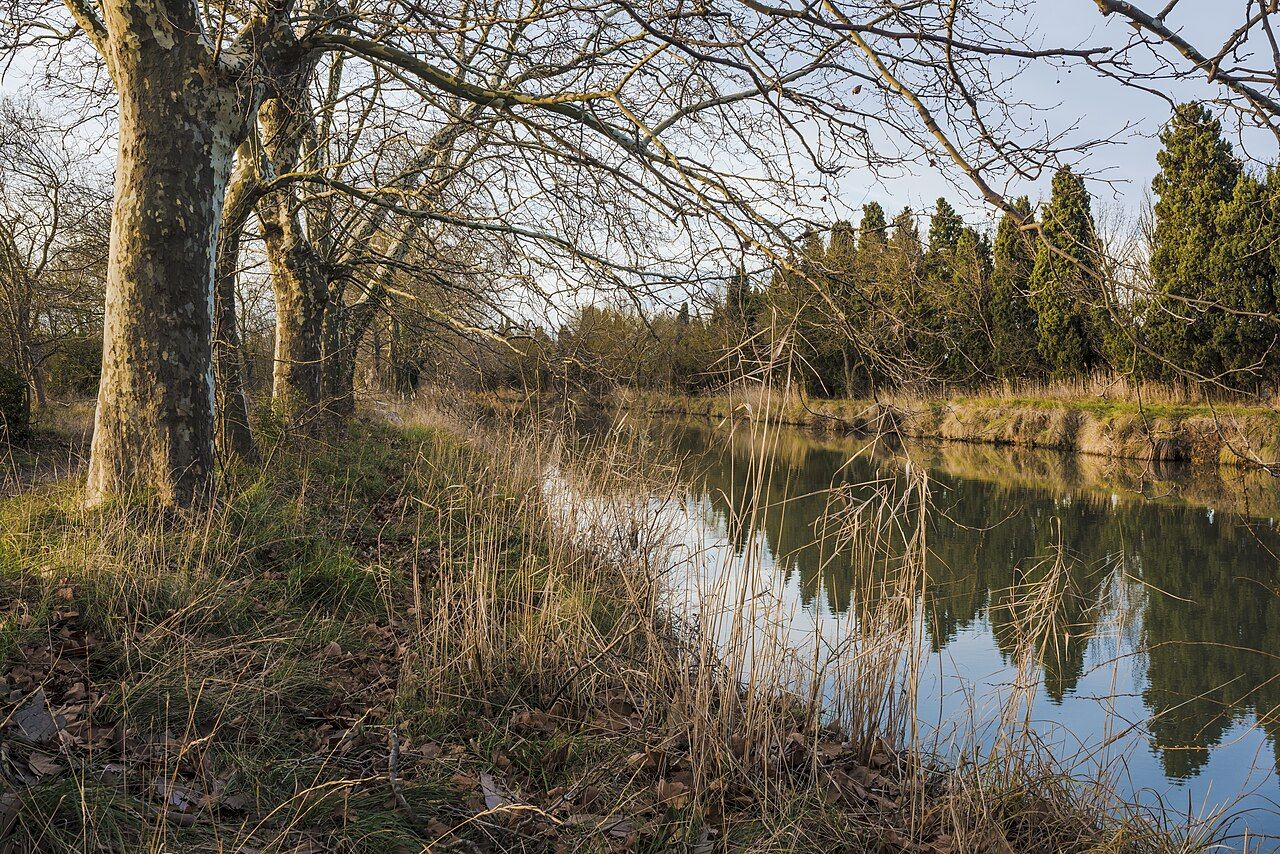
About 240 km is a long argument for moving slowly. The Canal du Midi makes that argument with unusual conviction. It runs from Toulouse to the Étang de Thau. Pierre-Paul Riquet designed it, and the work began in 1666. It was built between 1666 and 1681. Riquet died in 1680, a few months before it opened. The gap between design and opening gives the canal its weight. This was not a quick line drawn across a map. It was a plan that outlasted its designer.
That history matters, but it is not the whole appeal. The Canal du Midi is best considered at a pace that lets its structures register. A thermos of tea feels entirely appropriate beside such patience. This is a route for watching the canal hold its line. The long view is less persuasive than its separate parts. Locks, tunnel, trees: those are the details that stay.
The canal’s scale also makes it a useful companion to other journeys. Readers drawn to canals may enjoy Sweden's blue ribbon and the canal through the Great Glen. Walking-minded readers can follow Stevenson's walk with Modestine. Each link points towards a different sort of travel. Here, the interest lies in Riquet’s plan, and what remains of it.
Locks and tunnel
At Béziers, the Fonserannes locks form a staircase of eight locks. That is the kind of practical grandeur I trust. It does not need much decoration or explanation. The engineering makes its case through a sequence of levels. The locks are a clear reason to linger along this route. They turn an abstract feat into something legible.
There is a pleasing bluntness to the name Malpas tunnel. Finished in 1679, it is one of the first canal tunnels in the world. That claim places the canal in a much larger story. Still, the tunnel itself is the point. A route that disappears through a hill has more character than another stretch of uninterrupted water. Riquet’s work keeps offering these moments of practical surprise.
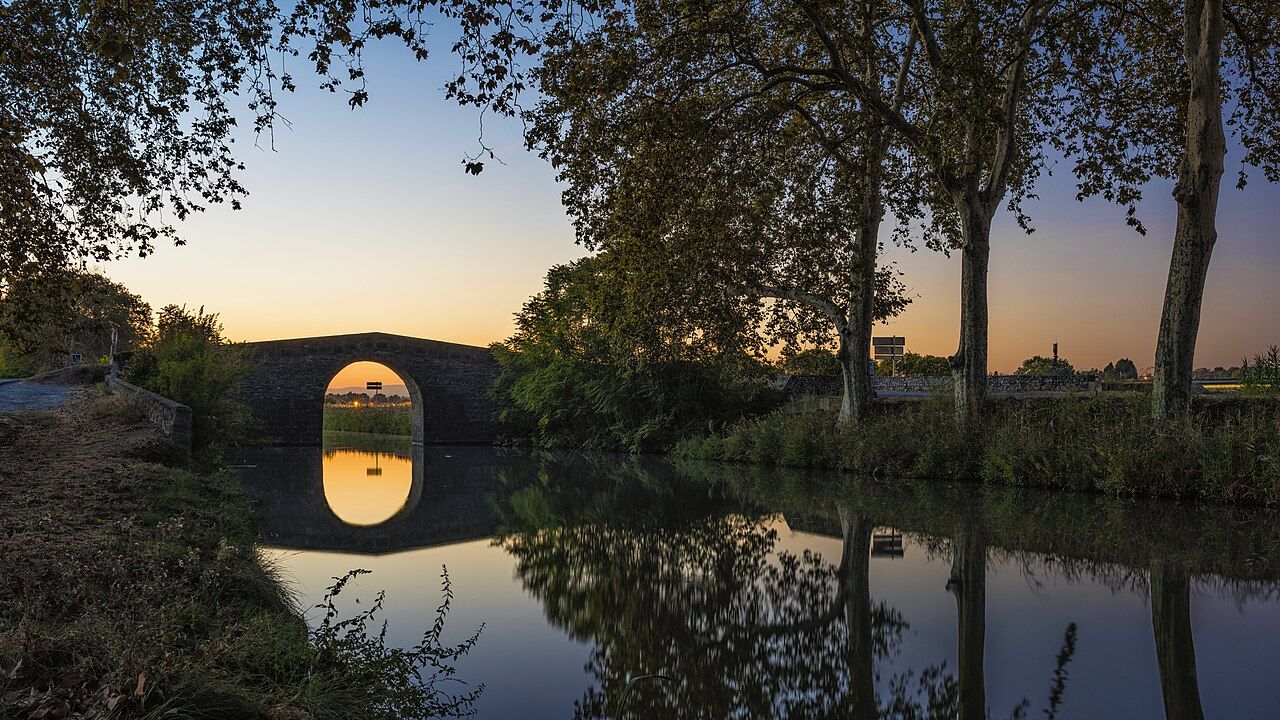
Neither feature needs to be inflated into a grand spectacle. The locks are compelling because they solve a problem. The tunnel is compelling because it carries the canal through. That plain usefulness is more persuasive than a string of superlatives. I would give both more attention than the simple pleasure of saying the canal is long.
The numbers
The numbers: about 240 km; 1-2 weeks; by boat or bicycle.
A cycle path follows much of the towpath. That makes the route open to two distinct kinds of attention. By boat, the canal itself is the journey. By bicycle, the towpath becomes part of the line. Neither choice makes the route feel like a checklist. The length asks for time, and the path gives the journey another way to unfold.
UNESCO placed the canal on its World Heritage list in 1996. The date gives its importance an official marker. It does not explain why the place works. For that, I would look again at the locks, the tunnel, and the plane trees. They make the canal more than an impressive piece of engineering. They make its length feel inhabited.
The trees
The plane trees along the banks are part of the canal’s identity. They offer a strong visual frame for its long, straight stretches. The trouble is not a small footnote. Since 2006, a fungal canker has killed many of the plane trees. The loss changes how the canal should be read. Its tree-lined character is not simply a permanent backdrop.
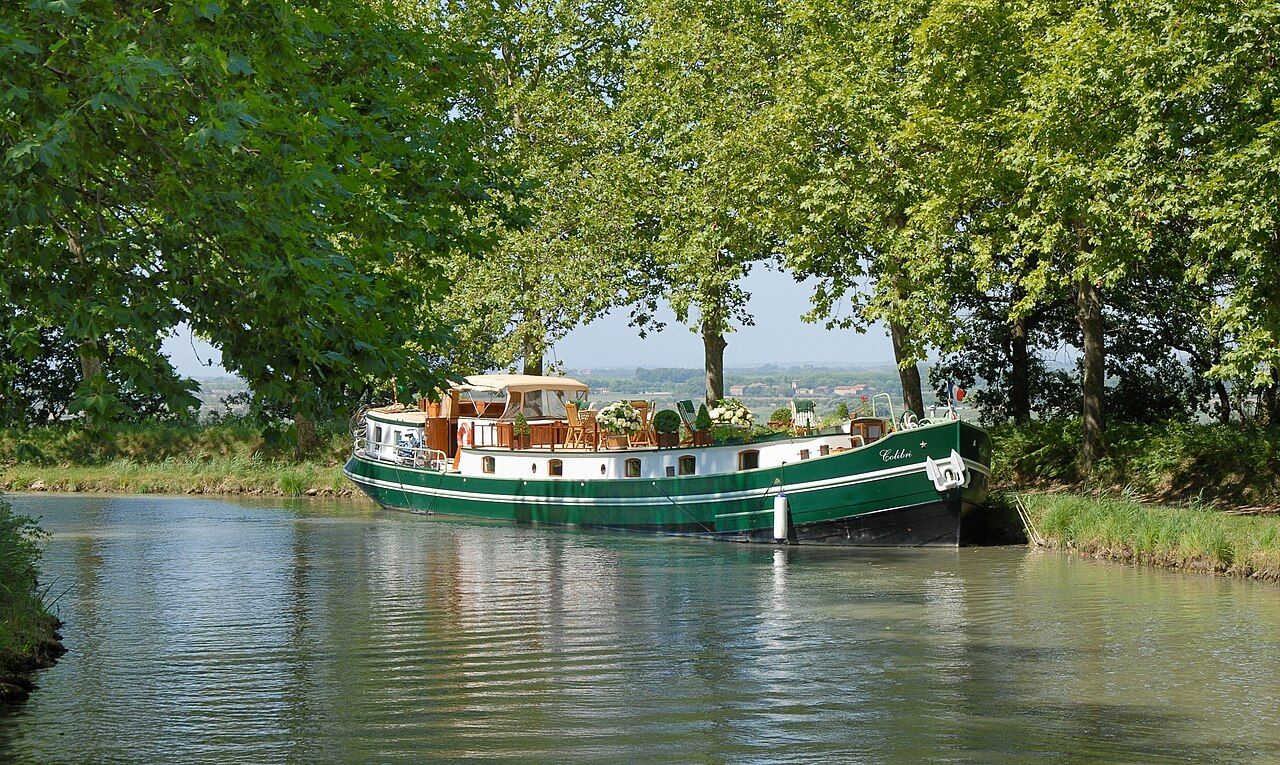
The trees make the canal, and its loss, impossible to separate.
The trees make the canal, and its loss, impossible to separate.
That is the hardest fact in this story, and the least decorative. The disease has already killed many trees along the banks. There is no neat way to praise the avenue while ignoring that damage. I prefer a more honest balance: the surviving trees matter, and so does their loss. The canal’s appeal is bound up with a landscape under pressure.
Voies navigables de France manages the Canal du Midi. That fact belongs beside the story of the trees. The canal is not only Riquet’s historical achievement. It is also a place managed in the present. Those two descriptions sit together without resolving the problem. The plane trees remain central, even as disease has taken many of them.
The canal was built between 1666 and 1681, but its strongest details feel immediate. At the locks, the staircase gives the route a clear rhythm. At Malpas, the tunnel makes absence part of the design. Along the banks, the trees draw the eye, then make their losses visible. That combination is the real reason to spend time here.
A thermos of tea, a length of towpath, and no rush to finish: that is enough. The canal keeps its own pace, and the trees keep their place in view. I would leave the grand verdicts behind. The locks, the tunnel, and that troubled line of trees make the better case.