Slow Trains of Europe
The Settle to Carlisle: a line built against the odds
Across the Pennines, the Settle to Carlisle pairs remarkable railway engineering with hard-won survival. Its arches, tunnel and high stations make the journey worth taking slowly.
- Length
- about 72 miles
- Usual time
- about 1 hour 40 minutes
- Travelled
- by train
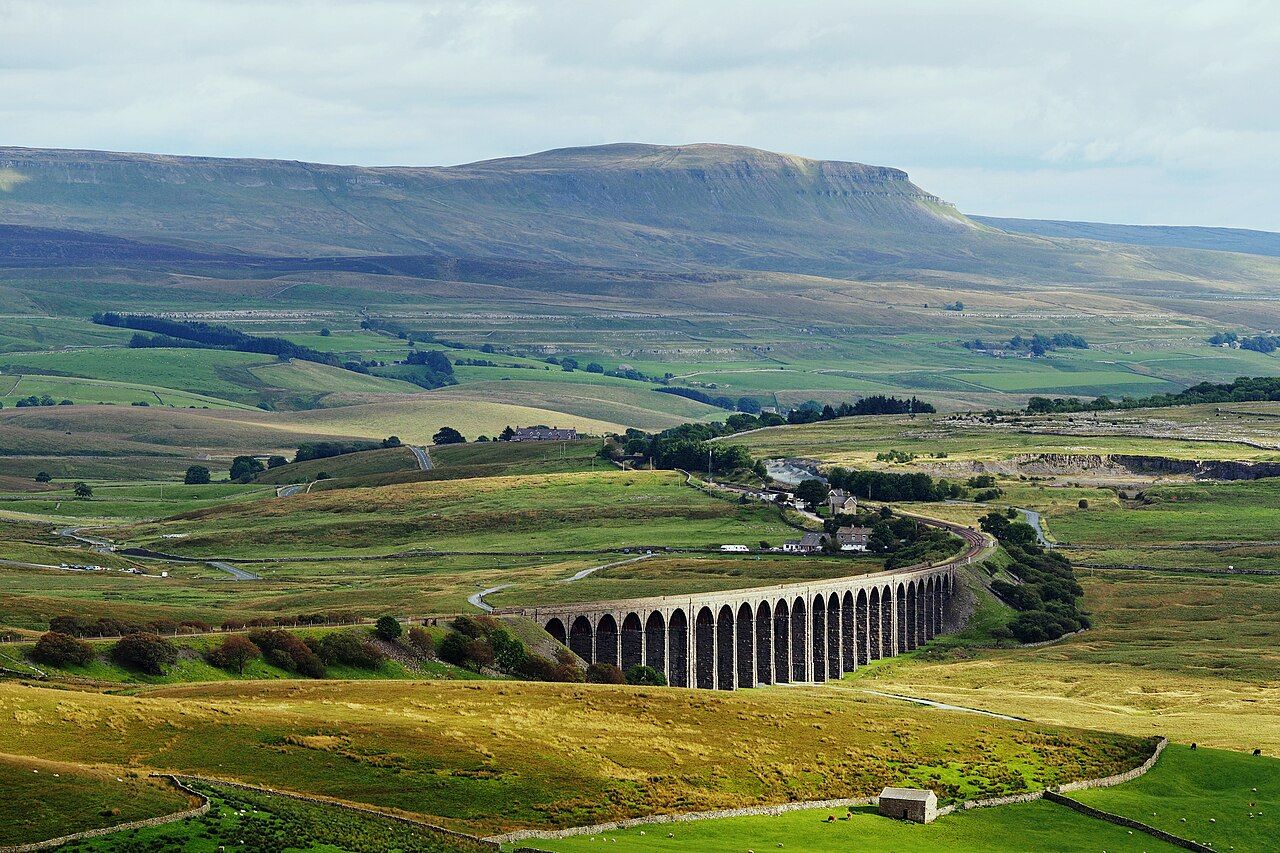
The train crosses Batty Moss on twenty-four arches, with the Ribblehead Viaduct carrying the line above it. That is a serious opening statement, and the railway keeps making its case.
The viaduct is the obvious image, but it is not the whole story. The Settle to Carlisle runs about 72 miles across the Pennines, with engineering and height giving the route its character.
The Midland Railway opened the line to passengers in 1876. That date matters less as a museum label than as a reminder: this was built to work, not merely to look impressive.
There is no need to pretend every mile competes with the viaduct. The pleasure is in seeing the route hold together, one structure and summit at a time.
Blea Moor Tunnel lies north of Ribblehead and runs about 2.4 km. A tunnel is hardly a view, but it belongs to the same bold argument as the arches.
The line does not offer one grand reveal and then coast. Its appeal comes from the changing scale, from a long tunnel to the exposed business of crossing the Pennines.
For a walking companion, there is the walk along England's spine. The railway makes a different proposition: distance covered by train, with the route itself doing the work.
A thermos of tea is my preferred company for this sort of looking. It gives the journey a small ritual, and leaves the railway to supply the spectacle.
The numbers: about 72 miles; about 1 hour 40 minutes by train.
Ais Gill summit, at about 356 m, is the highest point of the line. That is a useful fact, not a reason to reduce the journey to a height contest.
Dent station, at about 350 m, is England’s highest main line station. The distinction is clear: Ais Gill is the summit, Dent is the station.
Those two figures make the route’s elevations feel more than incidental. Still, the figures are best treated as landmarks, not as the whole experience.
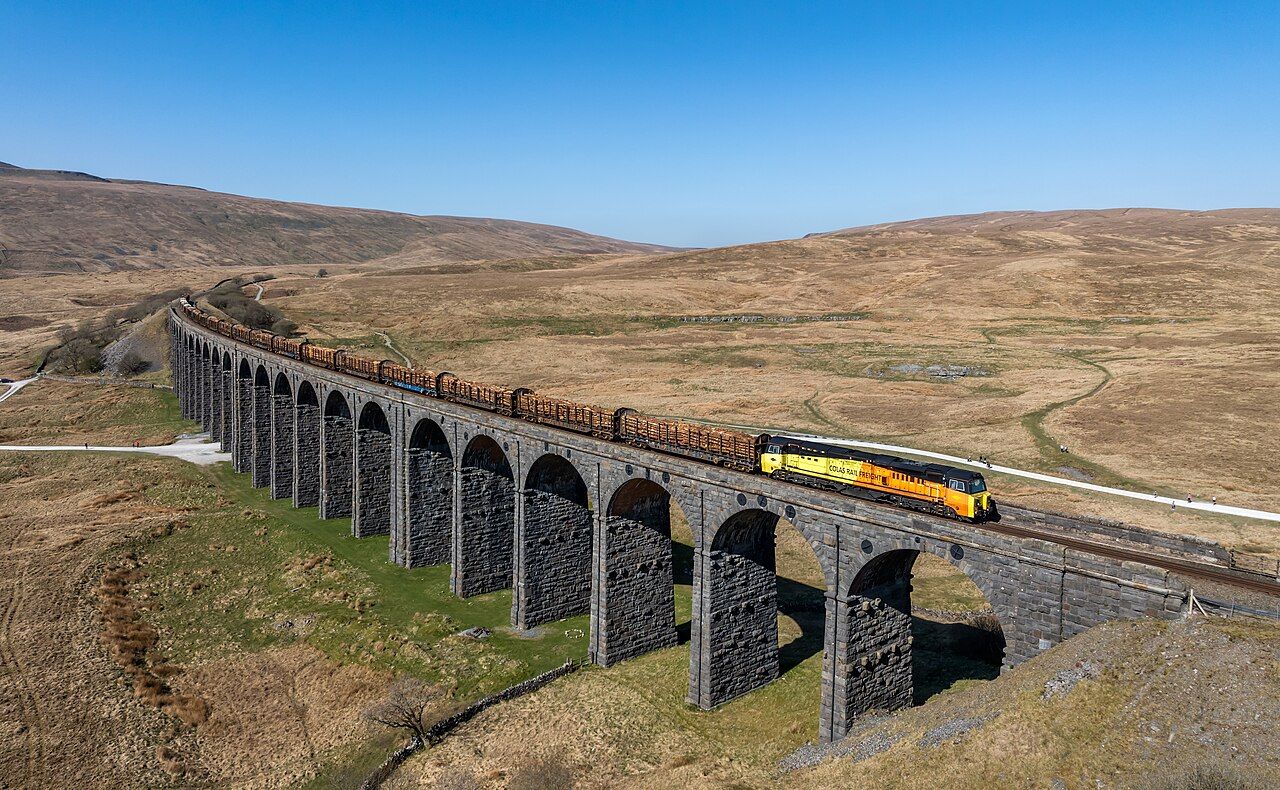
The line passes the Three Peaks of Ingleborough, Whernside and Pen-y-ghent. Their names give the railway a wider setting without turning it into a walking route.
There is a useful contrast with a quiet line from Swansea. Here, the headline is not quietness but the hard-won passage across the Pennines.
That passage was never guaranteed to survive. After a long campaign against closure, the government reprieved the line in 1989.
That is the second reason the Settle to Carlisle matters. Its engineering is visible; its survival is less visible, but gives the journey extra weight.
A railway saved from closure is not automatically worth travelling. This one has the evidence in its route, from Batty Moss to Ais Gill.
The longest railway in the world belongs to a different scale of railway journey. The Settle to Carlisle makes its case in a more compact span, with no need to imitate anything else.
Ribblehead Viaduct can dominate the imagination before the train moves. I would resist making it the entire verdict: tunnel, summit and station all matter.
That is why the route rewards attention more than a checklist. Each named feature adds something, but none needs inflated language to carry its share.
The railway also sits well beside another name that prompts thoughts of rail journeys shaped by landscape. The Settle to Carlisle stays firmly itself.
Its strongest quality is the joining-up: passenger railway, substantial engineering and a route across the Pennines. The story is coherent, and the views have earned their reputation.
I would take the journey for the whole line, not one famous structure. The viaduct is the hook; the route is the reason to stay with it.
The Settle to Carlisle is engineering worth the unhurried attention.