Pilgrim Ways
The Camino Portugués from Porto: Coast or Inland?
From Porto, this walk offers two distinct approaches before meeting the Minho, the fortress-like cathedral at Tui and the legend at Padrón.
- Length
- about 240 km from Porto
- Usual time
- 10-14 days
- Travelled
- on foot
Porto starts this walk with a choice, not a verdict. The central Camino Portugués heads north towards Santiago de Compostela. One version follows the Atlantic shore before turning inland.
That fork is the route’s first useful question. The coastal way across the north has its own appeal, but the central route’s landmarks make a strong case. I would not pick a side just for the word coastal. Portugal's wild southern coast path is another proposition altogether.
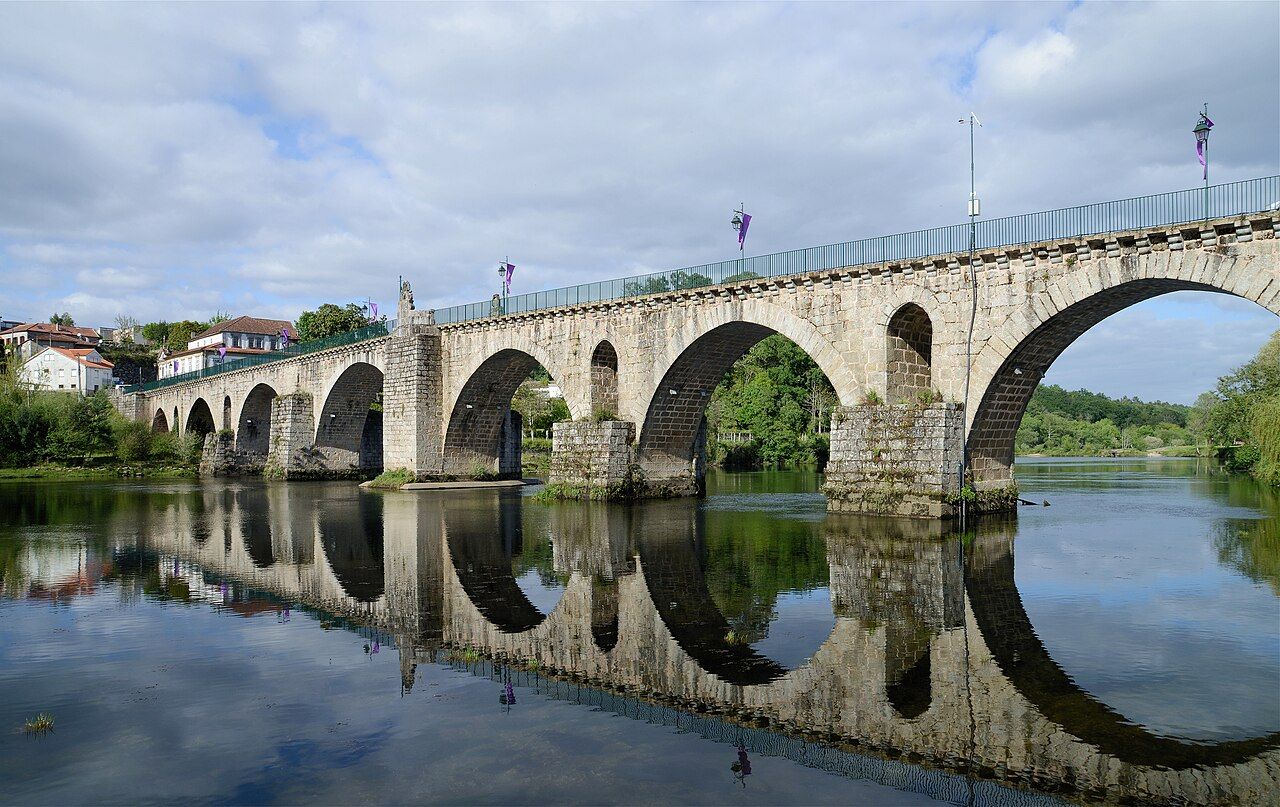
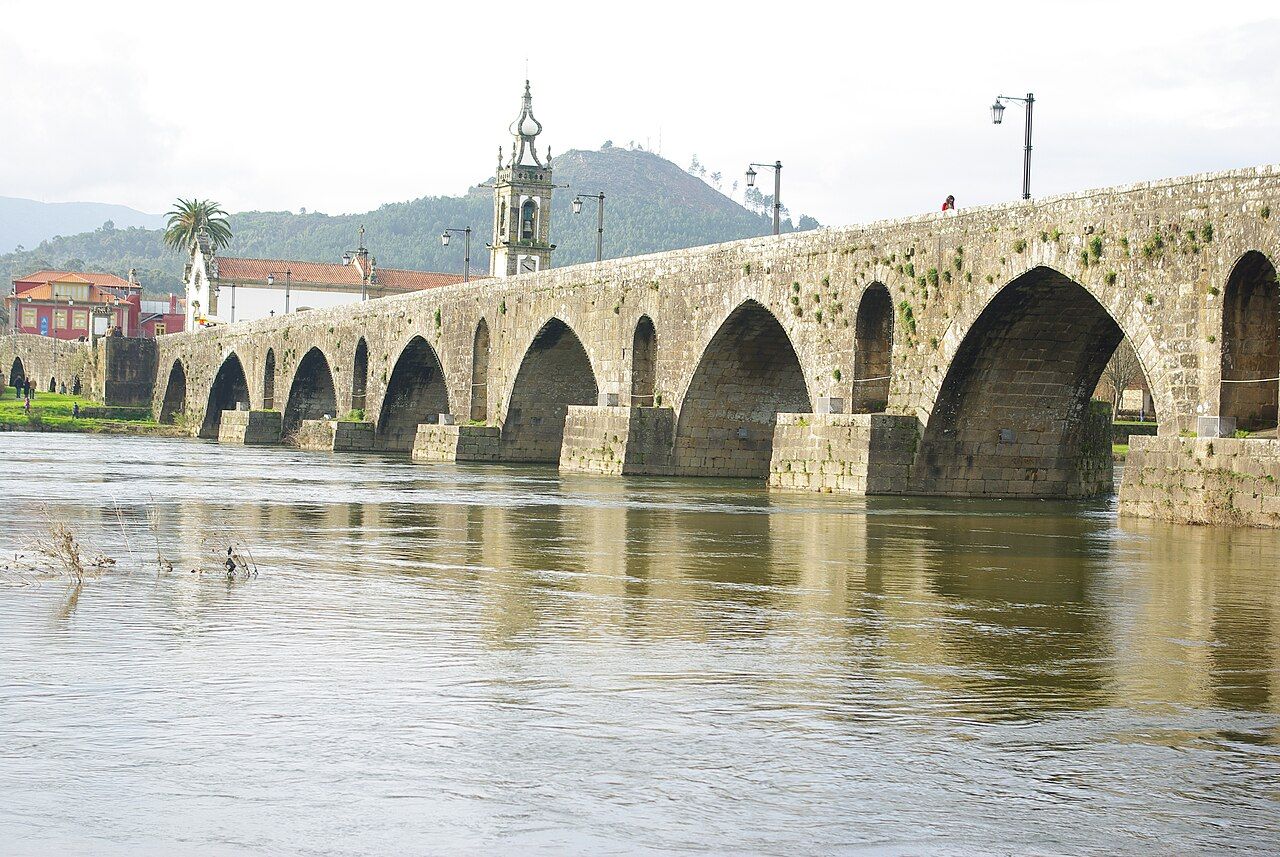
The inland line gives the walk a satisfying sense of passage. Ponte de Lima takes its name from a long bridge over the River Lima. The bridge is medieval and Roman, a rare place-name explanation that feels substantial. It is the sort of detail I like more than grand claims.
The Minho crossing at Tui
The numbers: about 240 km from Porto, on foot.
From there, the route enters Spain over the River Minho. The crossing is on the iron bridge between Valença and Tui. It is a clear threshold, and a better one than an abstract border on a map. The river gives the change of country a proper shape.
Tui rises above the Minho, with its cathedral on a hilltop. The cathedral has the look of a fortress. That is a persuasive sight, and a welcome change from treating every church as a decorative pause. My thermos of tea can wait while the place makes its case.
It has a river crossing, a hilltop cathedral and a bridge with history in its name. Those details do enough. The Camino Portugués is the second most walked route to Santiago, behind the Camino Francés, the busiest road to Santiago.
South of Tui
Pontevedra offers a different kind of landmark. The Capela da Peregrina is a round pilgrims’ church, built in the eighteenth century. Its shape is the point, not a long account of its importance. I like a building that can hold attention without a sales pitch.
The Camino’s final stretch carries the route towards Padrón and Santiago. Tradition holds that the boat carrying St James’s body came ashore at Padrón. It is a legend, and the route is better for carrying it. The story gives this last part a reason to linger.
There is also the Variante Espiritual, which takes a boat up the Ría de Arousa and the River Ulla. It retraces the legendary arrival of the saint. That is an unusual turn in a walk, and a genuinely strong alternative for anyone drawn to the story.
The coastal variant and the central route offer different openings. Both meet the same larger journey towards Santiago. The coastal way across the north is an appealing choice, but I would take the inland line for Ponte de Lima, Tui and Pontevedra. The walk’s character gathers through those places, rather than arriving all at once.
There is a risk of letting the legend do too much work. Padrón’s tradition matters, but the river crossing and the towns give the route its weight. The thermos of tea is a small comfort beside all that history. It is also a useful reminder to keep the pace human.
The Camino Portugués is a walk with a proper choice at its start. For me, the inland way has the better argument.