Rivers & Canals
The Wachau, in the Danube’s company
Between Melk and Krems, the river runs past terraced vineyards, apricots, a Baroque abbey and a castle with a royal prisoner in its history.
- Length
- about 36 km
- Usual time
- 1-2 days
- Travelled
- by boat or bicycle
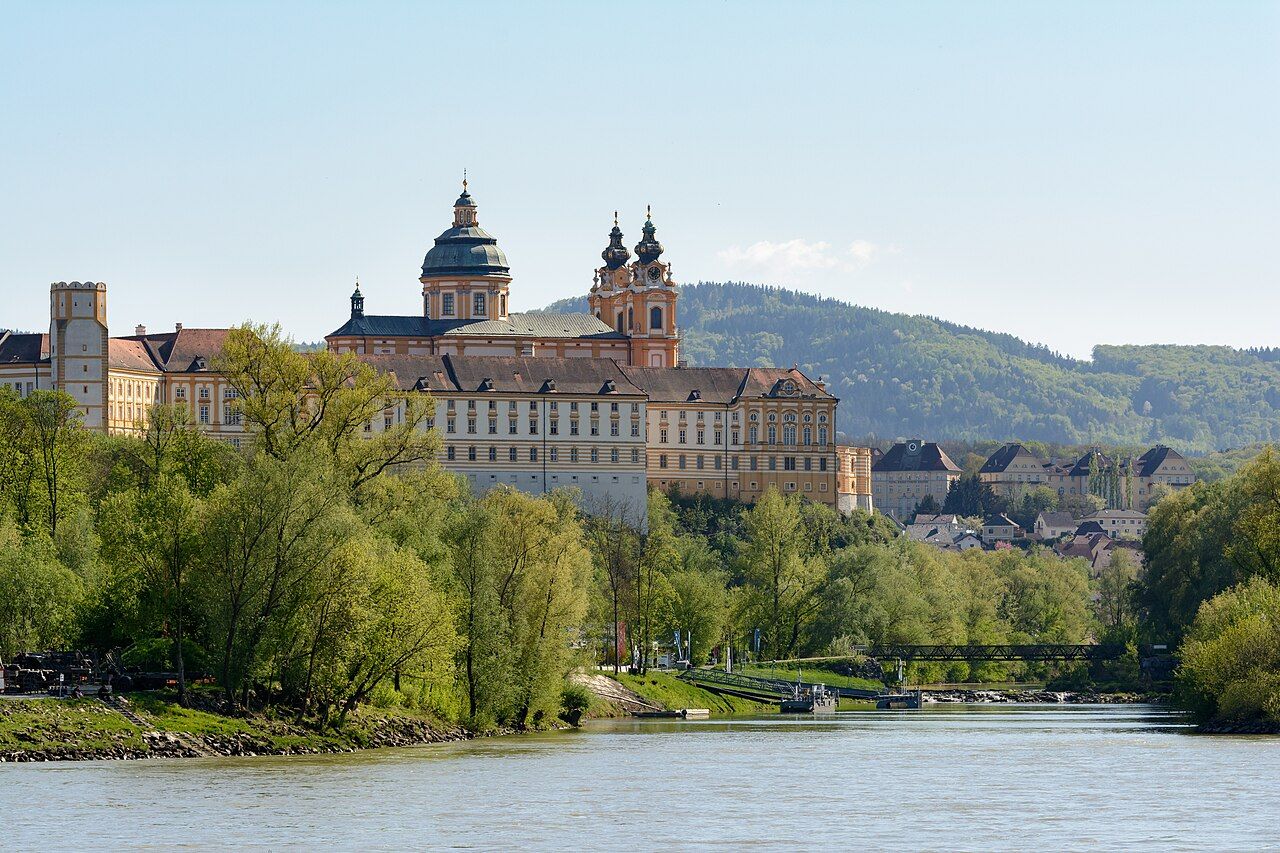
About 36 km of the Danube runs between Melk and Krems. The Wachau is a compact stretch, but not a slight one. Vineyards climb stone terraces above the river. Apricots are widely grown here, giving the landscape another claim on attention. In 2000, UNESCO inscribed the Wachau Cultural Landscape on its World Heritage list.
Melk Abbey makes the first strong impression. Baroque and perched on a rock above the river, it has the sort of presence that can dominate a view. The better balance comes from looking beyond the abbey, towards the cultivated slopes and the water. This is a landscape shaped by human work, not grand scenery alone.
The numbers: about 36 km; 1-2 days; by boat or bicycle.
At Dürnstein, the blue and white tower of the abbey church serves as a landmark on the river. Above the town stands the castle where Richard the Lionheart was held in 1192 and 1193. The history is striking, though the Wachau’s appeal does not depend on royalty. Its terraces and fruit-growing give the stretch more texture than a single famous story can.
The contrast is part of the pleasure. The Wachau asks for attention to its details: stone terraces, apricot growing, and the changing presence of the river. It holds a different interest from the castles of the Middle Rhine, with the cultivated slopes doing more of the work here. A thermos of tea feels like the right companion to such a measured landscape.
For a different thread along this river, there is the young walker following the Danube. The terraces also make a quieter argument than the road through Siena. Neither comparison needs to settle the matter. The Wachau is best judged on its own terms: a short river stretch, made distinctive by vineyards, apricots and the landmarks above the water.
Krems marks the eastern end. The Wachau earns its time through detail, not spectacle.