Slow Trains of Europe
The Flåm Railway: A Short, Steep Descent
From Myrdal to Flåm, the railway drops 863 m through tunnels, with steep gradients and a stop beside Kjosfossen waterfall.
- Length
- 20 km
- Usual time
- about 1 hour
- Travelled
- by train
20 km is enough to make the Flåm Railway feel substantial. From Myrdal, it drops 863 m towards Flåm and the fjord. The line is short, but its gradient gives the journey a clear purpose.
A short route can still have a firm shape. Here, the descent supplies it. The change in height is not incidental; it is the railway's main argument. That makes the journey easy to judge, without asking it to be anything else.
Myrdal station stands at about 866 m on the Bergen Line. From there, the railway descends without a rack, reaching gradients of up to 5.5 per cent. That is the figure I keep returning to: steepness doing the work, plainly and without fuss. The line opened in 1940, and passes through 20 tunnels on its way down.
At Myrdal, the Flåm Railway meets the main line from Oslo. The contrast with the narrow gauge to Shimla is tempting, but this route makes its case through the descent alone. For another kind of route shaped by infrastructure, there is Sweden's old canal.
The numbers: 20 km; about 1 hour; by train.
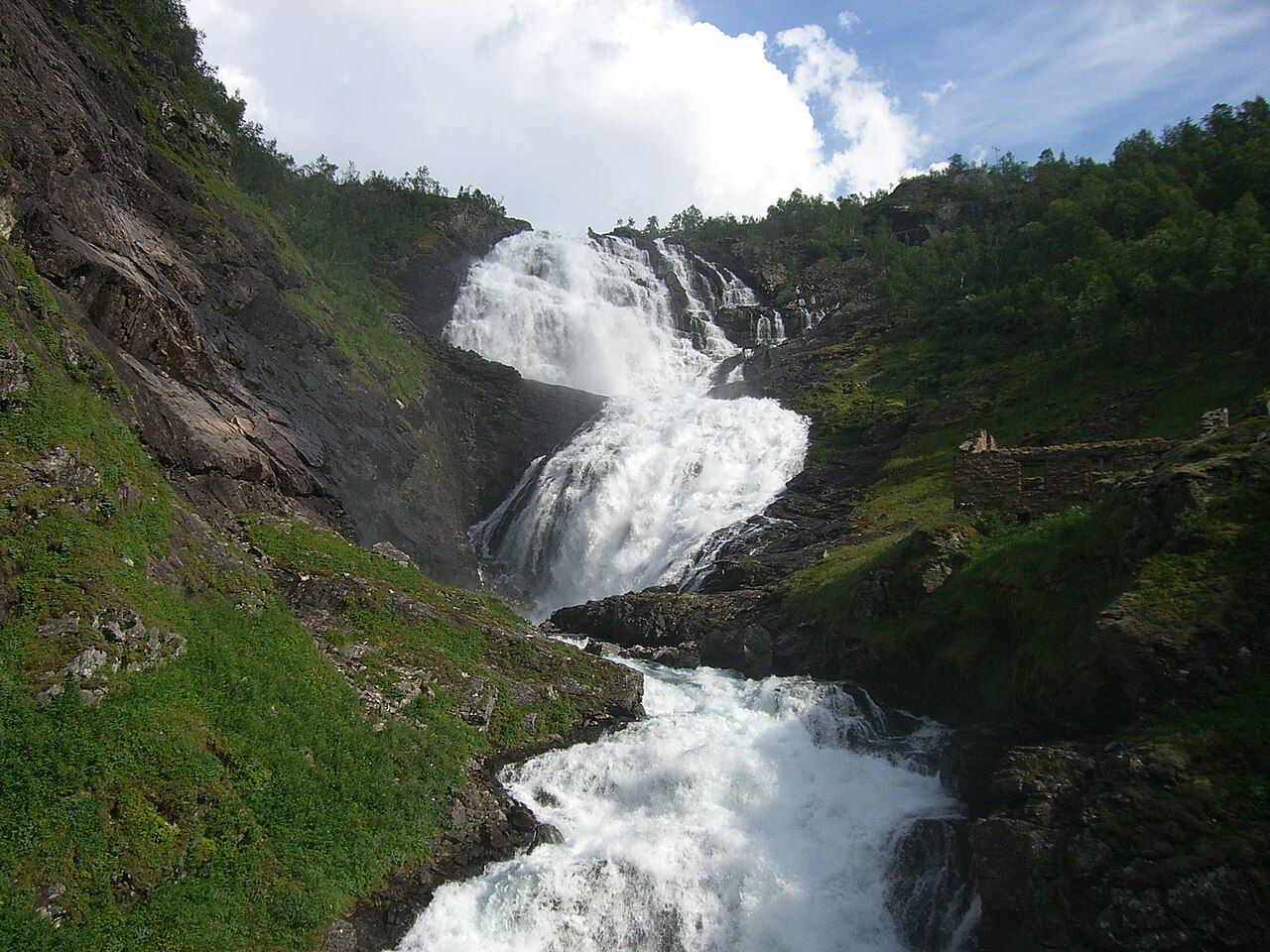
The stop at Kjosfossen is the line’s most direct interruption. Trains pause there so passengers can step onto a platform beside the waterfall. It is a practical pause, not a reason to forget the railway itself. The descent remains the main event, with the tunnels and changing height giving it enough substance.
Flåm lies at the head of the Aurlandsfjord, an arm of the Sognefjord. That destination gives the railway a clear endpoint, rather than a vague promise of scenery. I like a journey with a definite shape. A thermos of tea suits the pace: something warm, while the line keeps dropping.
The Flåm Railway earns its time through the gradient, not grand claims.