Long Lines
The Kalka–Shimla Railway: A Climb Through 102 Tunnels
A five-hour climb from Kalka to Shimla, with 102 tunnels and a clear reason for the railway’s existence.
- Length
- about 96 km
- Usual time
- about 5 hours
- Travelled
- by train
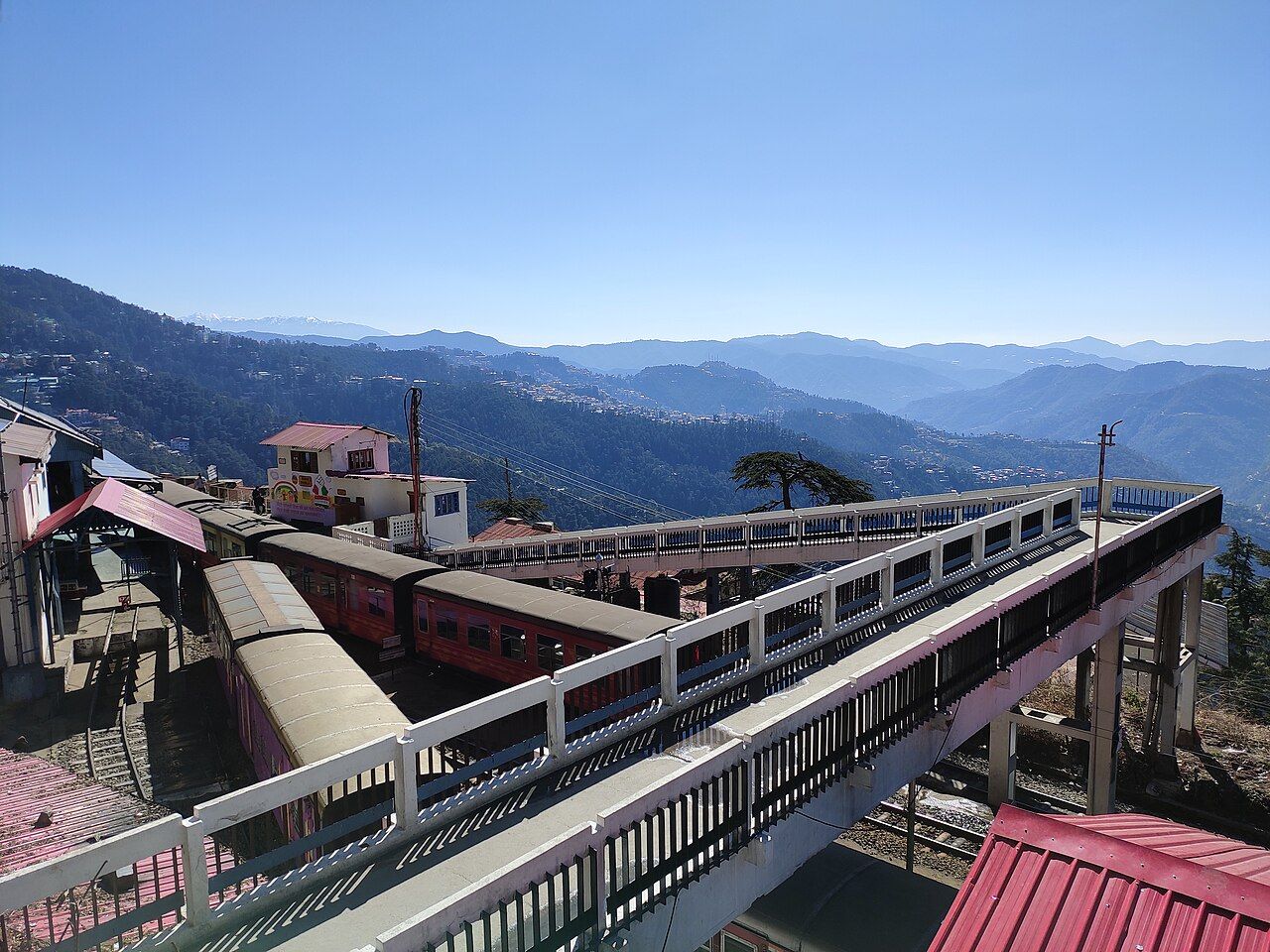
The line covers about 96 km, and takes about five hours. It runs from Kalka to Shimla, with a purpose larger than distance. Shimla served as the summer capital of British India. The railway opened in 1903, built to carry the government there. That purpose still gives the route its shape.
The track gauge is 762 mm, or two feet six inches. It is a small figure, but not a small undertaking. The route climbs from Kalka towards Shimla, in the foothills of the Himalaya. Shimla stands at more than 2,000 m above sea level. Five hours gives the climb room to register. I’d rather have that than a journey reduced to speed.
The tunnels make the route’s engineering hard to ignore. Across the line, 102 tunnels interrupt any easy account of distance. Barog tunnel is the longest, at about 1.1 km. That is the detail that gives the railway its strongest image. The rest matter collectively, not as a numbered parade. Barog earns a pause in the telling, even without turning it into a grand tale.
The numbers: about 96 km; about five hours; by train.
Its company includes the toy train to Ghum, the lakeside railway in Siberia, and the Myrdal to Flåm branch. The Kalka–Shimla line has a purpose unusually easy to grasp. It carried the government towards its summer capital, and still makes that climb the point. The figures already make a decent case.
The narrow gauge, the long tunnel, and the steady ascent belong together. None needs to be treated as a standalone marvel. What matters is how they add up across the journey. The train takes about five hours, and the line covers about 96 km. That is a measured pace, not a flaw to apologise for. I’d take a thermos of tea over a faster version of this trip.
At the end, Shimla sits above the foothills, and the line has done its climbing. In my mind, the thermos comes out there: a quiet finish to a railway with a clear job.