Slow Trains of Europe
The Bergen Line across the Hardangervidda
A measured crossing of the Hardangervidda, with Finse, snow sheds, the Finse Tunnel and Myrdal giving the Oslo–Bergen railway its character.
- Length
- about 496 km
- Usual time
- about 7 hours
- Travelled
- by train
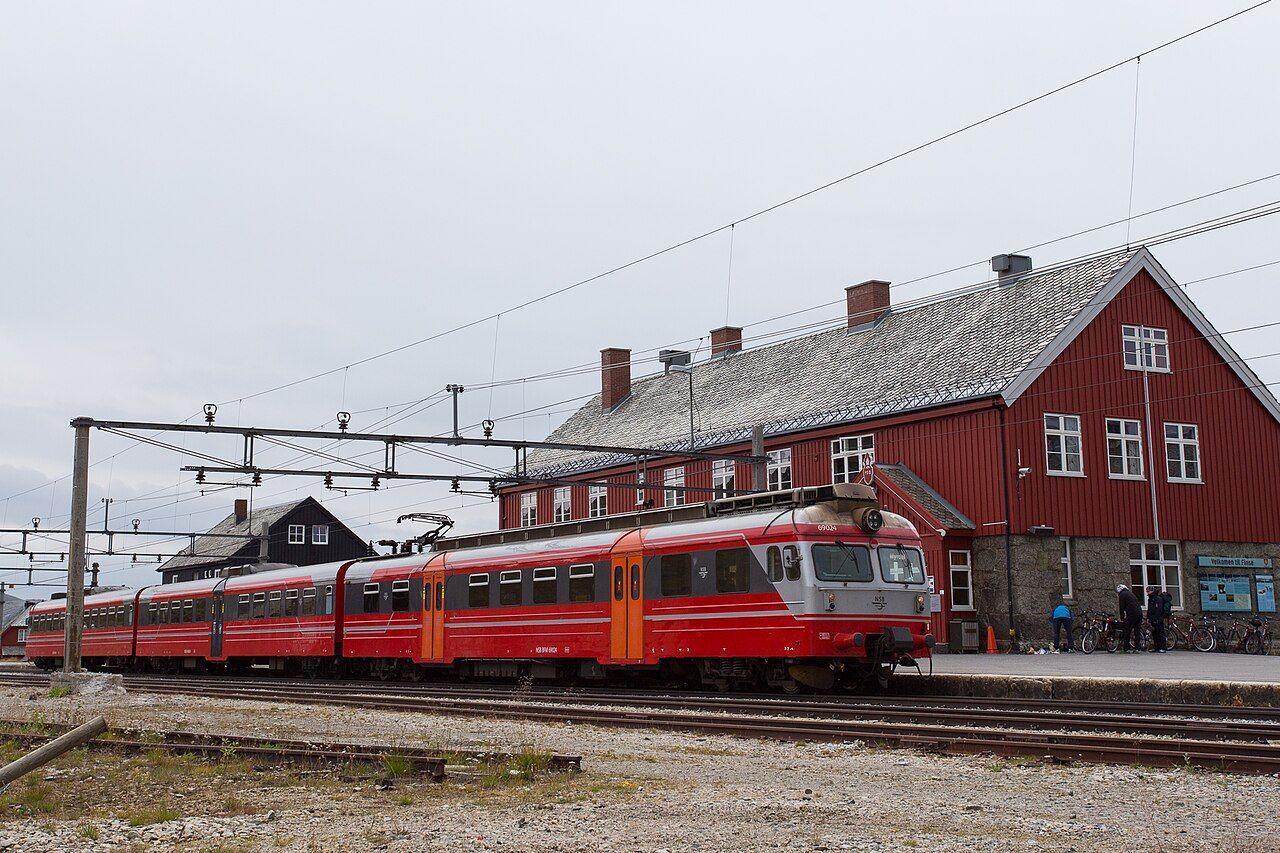
The railway crosses the Hardangervidda, and the scale changes. This is not a route needing much decoration. Its argument is plain: distance, height, then plateau. I like that bluntness; the train does the explaining. A thermos of tea suits this unhurried measure.
The Bergen Line runs about 496 km between Oslo and Bergen. It opened throughout in 1909, a useful mark of ambition. The journey takes about seven hours, which feels earned. Not because every minute promises spectacle; it doesn’t. The attraction is the crossing itself, not constant novelty. A long railway earns its place by making distance legible.
A route like this asks for patience, not a packed itinerary. Seven hours is a real portion of a day. I would not hurry the middle simply to claim the endpoints. The plateau is the reason to stay with the train. Its best decision is keeping the crossing central. It doesn’t need to promise anything beyond that.
Finse gives the route its clearest point of measure. At 1,222 m, it is the highest station on the Norwegian railway network. That figure does more than decorate a timetable. It makes the station a firm marker in the journey. The elevation is exact; the feeling is harder to file. For me, that is enough distinction. There is honesty in a station defined by height.
Across long stretches, snow sheds and fences protect the track. They are practical structures, and that is their appeal. This railway’s drama comes with work attached. Protection is part of the view, not a footnote. The plateau can sound like a blank space on paper. These defences make the railway’s terms visible. The details matter because they are not decoration.
The Finse Tunnel is about 10 km long and opened in 1993. It belongs to the same practical logic as sheds and fences. I don’t count it against the journey. The line is not trying to stage a postcard every moment. It has better priorities: getting across, and doing so convincingly. A thermos of tea is welcome company for that steady argument.
Myrdal station is the junction for the Flåm Railway. That connection gives the route a useful hinge. At Myrdal, the line meets the steep branch down to Flåm. It is a change of emphasis, not a reason to forget the main crossing. My preference remains with the railway that carries the plateau as its central subject.
There are other journeys worth keeping in the same mental map: Iceland's volcanic trek and the pilgrim path through Gudbrandsdalen. They sit well beside a route that makes distance the point. The Bergen Line does not need borrowed drama. Its appeal comes from a clear passage across the largest mountain plateau in northern Europe.
Food is not the reason I would choose this journey. A flask of tea, though, fits its measured pace. Seven hours asks for a little patience, and the line gives that patience a purpose. I would rather let the crossing occupy the day than treat it as dead time between Oslo and Bergen.
The Bergen Line is at its best when it trusts the crossing.