Slow Trains of Europe
The Glacier Express, at Alpine pace
A whole day from Zermatt to St Moritz, with the Oberalp Pass, the Landwasser Viaduct and steep sections that invite a slower look.
- Length
- about 290 km
- Usual time
- about 8 hours
- Travelled
- by train
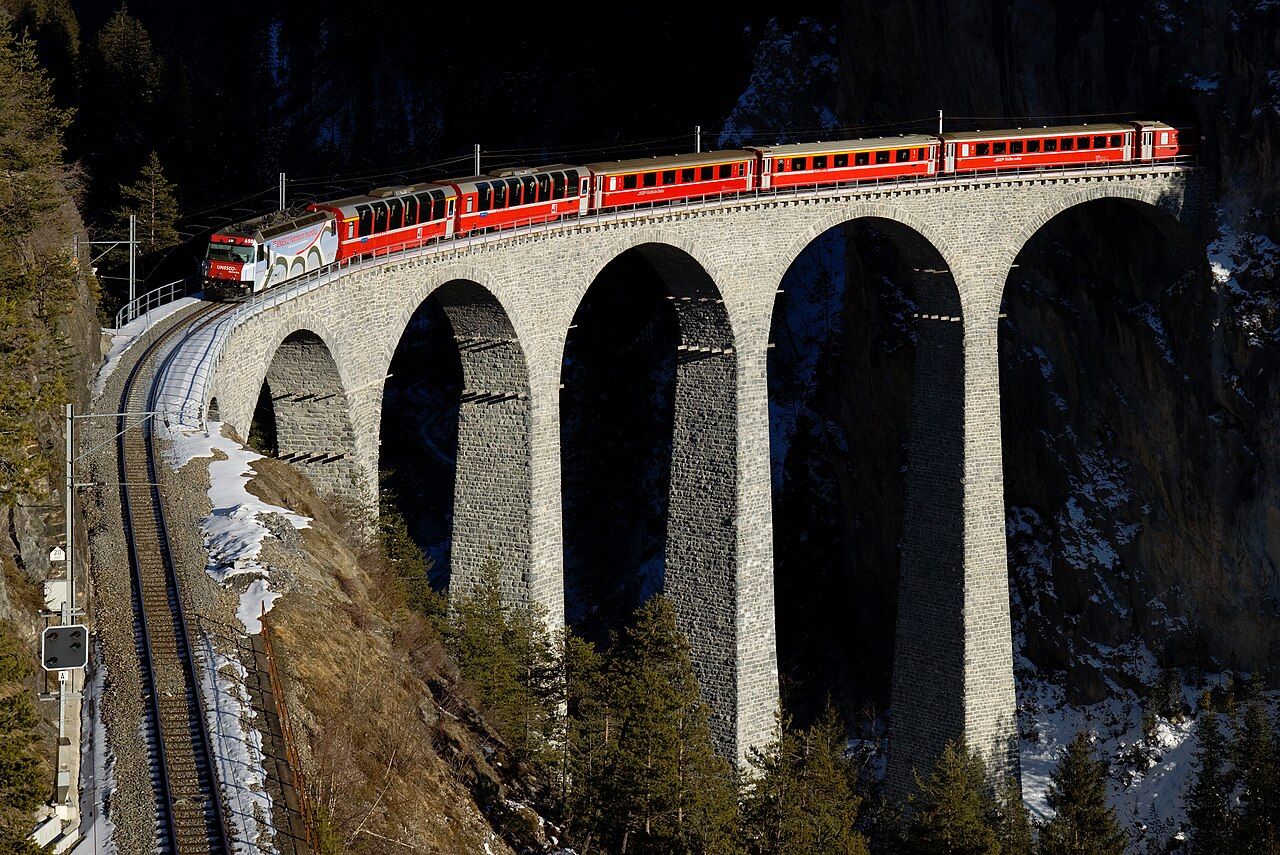
The train leaves Zermatt for a whole day across the Alps. The route runs about 290 km to St Moritz, with no need to hurry the distance. My thermos of tea suits the slower sections; the window supplies enough to watch.
Zermatt sits at about 1,600 m, at the foot of the Matterhorn. That is a firm opening statement, but the journey is not only about its start. The line gathers bridges, tunnels and climbs into one long crossing.
There are 291 bridges and 91 tunnels along the route. Those figures sound neat; the experience is less tidy. A view appears, narrows, then gives way to another passage through the mountain.
The Oberalp Pass, at 2,033 m, is the route’s highest point. On the steep sections, progress can feel close to walking pace. That is a compliment: the train gives the landscape time to register.
The numbers: about 290 km; about eight hours; by train.
Eight hours is a commitment, not a minor transfer. The reward is the change of pace itself. This is a line to settle into, rather than one to treat as transport between two stops.
The Glacier Express service began in 1930. Its route still makes a clear case for taking the long way. The line over the Bernina Pass offers another kind of rail crossing, but this journey earns its own unhurried place.
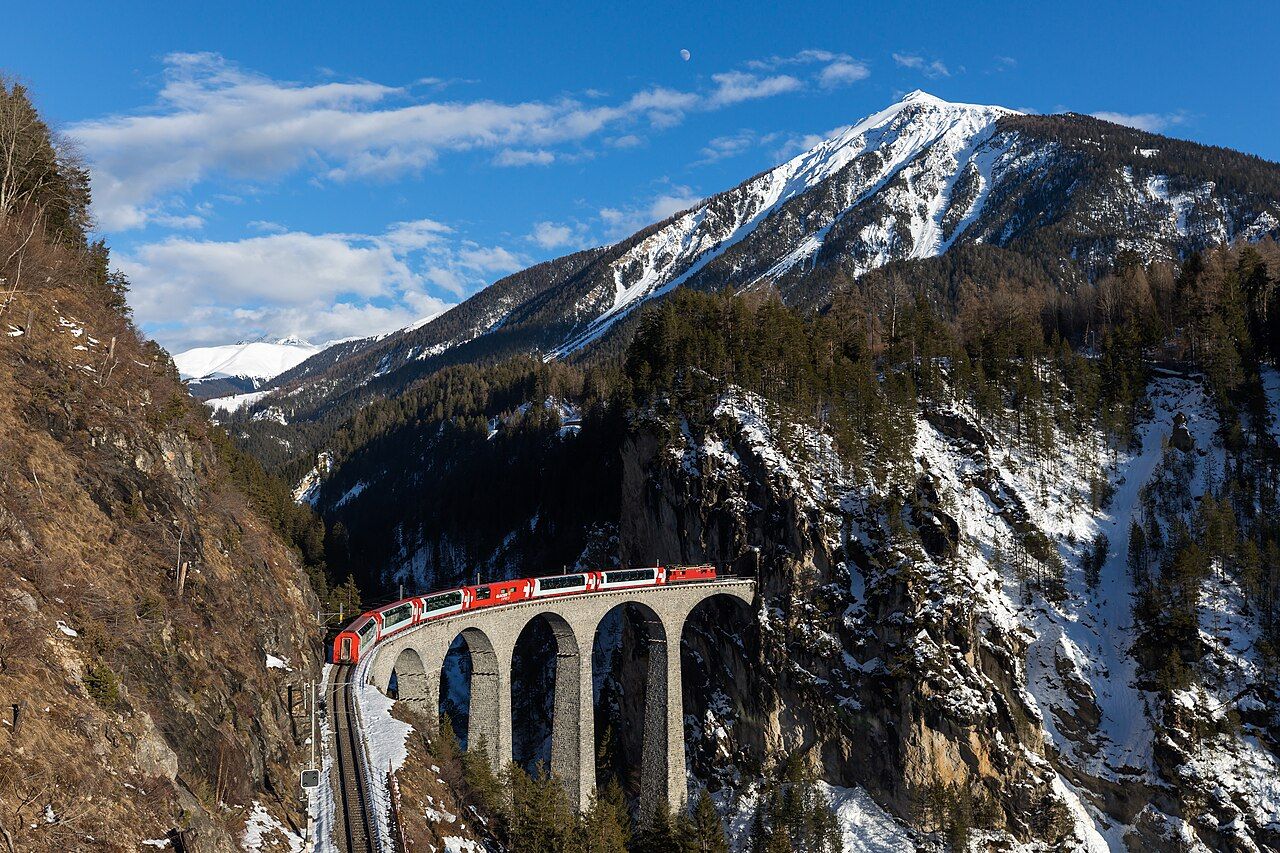
The Landwasser Viaduct near Filisur is about 65 m high. It leads straight into a tunnel in the cliff, a direct piece of drama without any need for embellishment. I would give this stretch proper attention, not let it blur into the day.
Then the route’s engineering shifts from open crossing to a passage beneath the mountain. The Furka Base Tunnel opened in 1982, replacing the old line over the Furka Pass beside the Rhône Glacier. That change is worth knowing; it gives the journey a longer memory.
There is a useful contrast here with a high walk to the Matterhorn. The train keeps the day moving while still allowing the steep ground to set its pace. I prefer that balance to racing through a landscape for the sake of arriving sooner.
Nor is the appeal limited to this route. spiral tunnels in the Rockies make a different argument for rail, while this line’s bridges and tunnels keep the Alps close at hand. The comparison is enough for this journey; the Glacier Express does not need borrowed grandeur.
For all its length, the journey’s strongest moments are specific: the high point at Oberalp and the viaduct leading into rock. The rest matters because it connects them. A full day gives those landmarks room, instead of turning them into a quick list.
Take a thermos of tea, settle in, and let the steep sections slow the view. The best part is that the train does not pretend the Alps are a shortcut.