Long Lines
The Darjeeling Himalayan Railway: a line of turns
Loops and zigzag reverses carry this narrow-gauge railway from New Jalpaiguri to Darjeeling, with Ghum and Batasia Loop on the climb.
- Length
- about 88 km
- Usual time
- about 7 hours
- Travelled
- by train
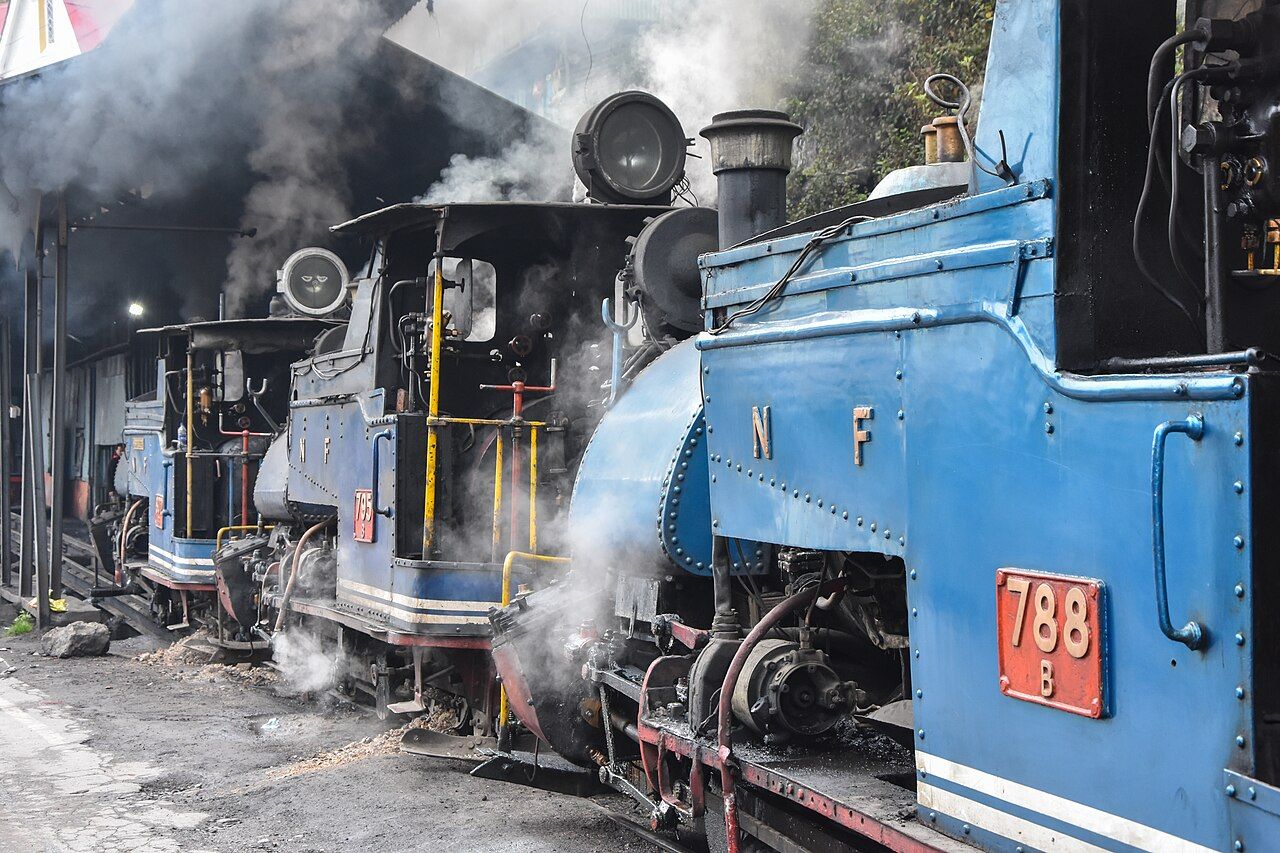
The line bends, reverses, then climbs again. That is the Darjeeling Himalayan Railway’s central argument: make the mountain route through turns, not tunnels. Its track works by changing direction, which gives the journey its character. The straight line would be simpler, but less interesting.
It runs about 88 km from New Jalpaiguri to Darjeeling. The railway opened in 1881, and its gauge is 610 mm, or two feet. Those are useful figures, though the more memorable fact is how the line uses its limited width. The loops and zigzag reverses are the point, not a distraction from it.
The numbers: about 88 km; 610 mm gauge; opened in 1881.
A thermos of tea is my preferred measure of railway patience. On this line, the repeated changes of direction sound like a fair trade for the climb. The route does not pretend that progress must be straight. It makes the engineering visible, and that is a better kind of spectacle than speed.
Loops below Ghum
Ghum is about 2,258 m above sea level and the highest station on the line. That gives the climb a clear marker, without needing grand claims about it. The railway reaches its highest point at a named station, and the route’s turns have brought it there. I like that plainness.
Below Ghum, the Batasia Loop gives a view of Kangchenjunga on clear days. The loop is not merely a detail to tick off; it explains how this railway climbs. The view is an extra, and one with a condition attached. On a clear day, the mountain is part of the scene. Otherwise, the railway still has its own shape.
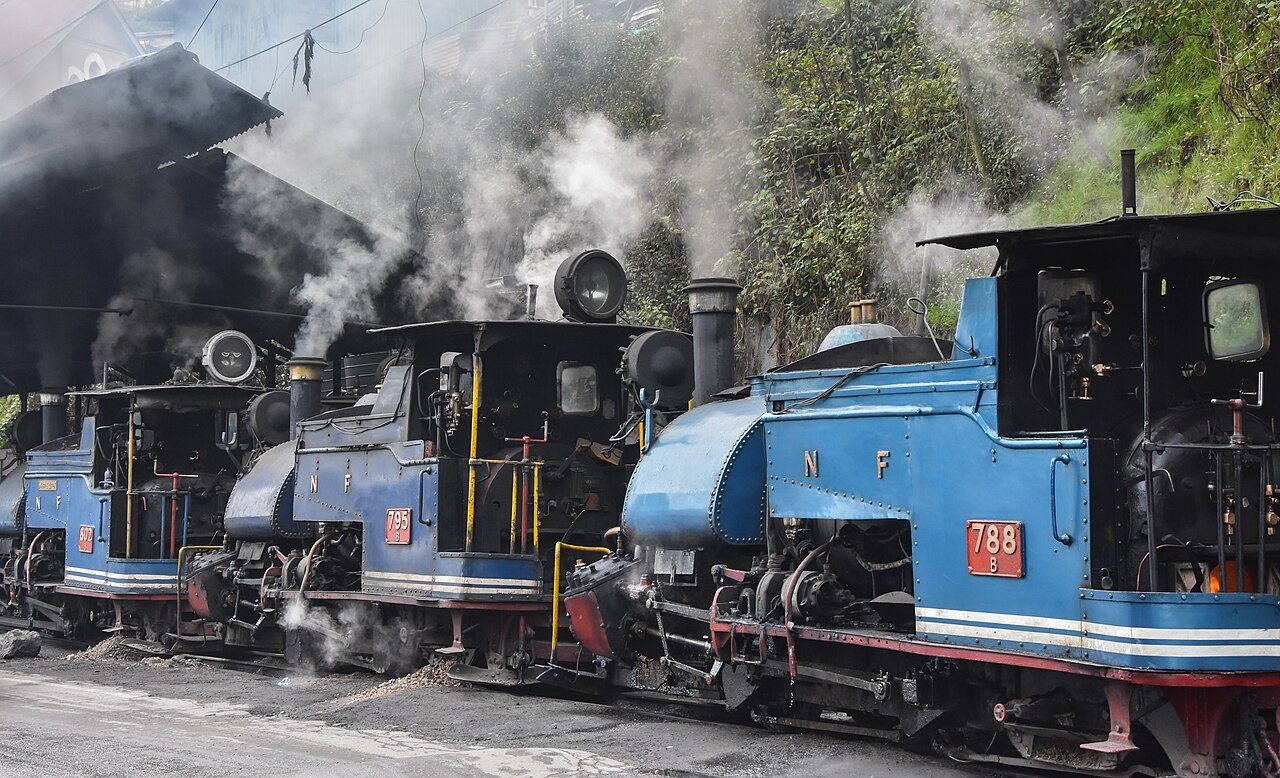
The thermos earns its place here as a companion to the pauses between turns. I prefer a railway that shows its workings over one that hides them. This one gives the route a visible rhythm: curve, reverse, climb. The repeated pattern could become tiresome, but it also makes the line distinctive. Its best feature is not a single view. It is the method.
That makes the railway a better subject than a fast ride. Its point is not simply reaching Darjeeling. It shows the work needed to get there. The turns repeat by design. I would rather watch that process than lose it behind a tunnel. The line earns its attention through its construction.
There are other railways worth considering beside it: the railway to Shimla's hills takes the comparison towards another mountain route, while Swiss climb to Ospizio Bernina and a steep Norwegian branch line point elsewhere. The Darjeeling line has a particular appeal because its loops and reverses are so central to the journey.
In 1999, UNESCO placed the railway on its World Heritage list. The site later expanded as the Mountain Railways of India: the Nilgiri line joined in 2005, then the Kalka–Shimla line in 2008. The recognition gives the railway a wider frame, but the route itself remains the strongest case for attention.
I would take the turns over a tunnelled shortcut, and keep the tea close.