Pilgrim Ways
The Kumano Kodo Nakahechi: a route with a clear centre
The Nakahechi has imperial history, small oji shrines and a striking old shrine ground. Its strongest moments are specific, and the route is better for that.
- Length
- about 38 km on the Nakahechi
- Usual time
- 2-4 days
- Travelled
- on foot
At Oyunohara, a torii gate about 34 m tall marks the old shrine ground. Kumano Hongu Taisha once stood here, on a sandbank in the river. The gate gives the place a clear centre, even before the story behind it comes into view. This is where the Nakahechi earns its attention: not through a vague promise of pilgrimage, but through places with particular histories.
The Kumano Kodo is a network of pilgrimage routes in Japan’s Kii Peninsula. The Nakahechi was used by retired emperors and aristocrats travelling from Kyoto from the tenth century onwards. The useful question is what remains along the way. Here, small subsidiary shrines called oji mark the path, making the pilgrimage legible in modest intervals.
Their value is not that they turn every stretch into a spectacle. It is that they keep the route connected to its own purpose. That is a better kind of continuity than grand claims.
There is good sense in that modesty. Grand titles can make a route sound grand at every turn, and that is rarely a convincing way to judge one. The oji are smaller markers, with a practical place in the route’s story. I would rather have these points of attention than a claim that every stretch must feel momentous. The Nakahechi gives the journey a structure, then lets the larger shrines carry the ceremony.
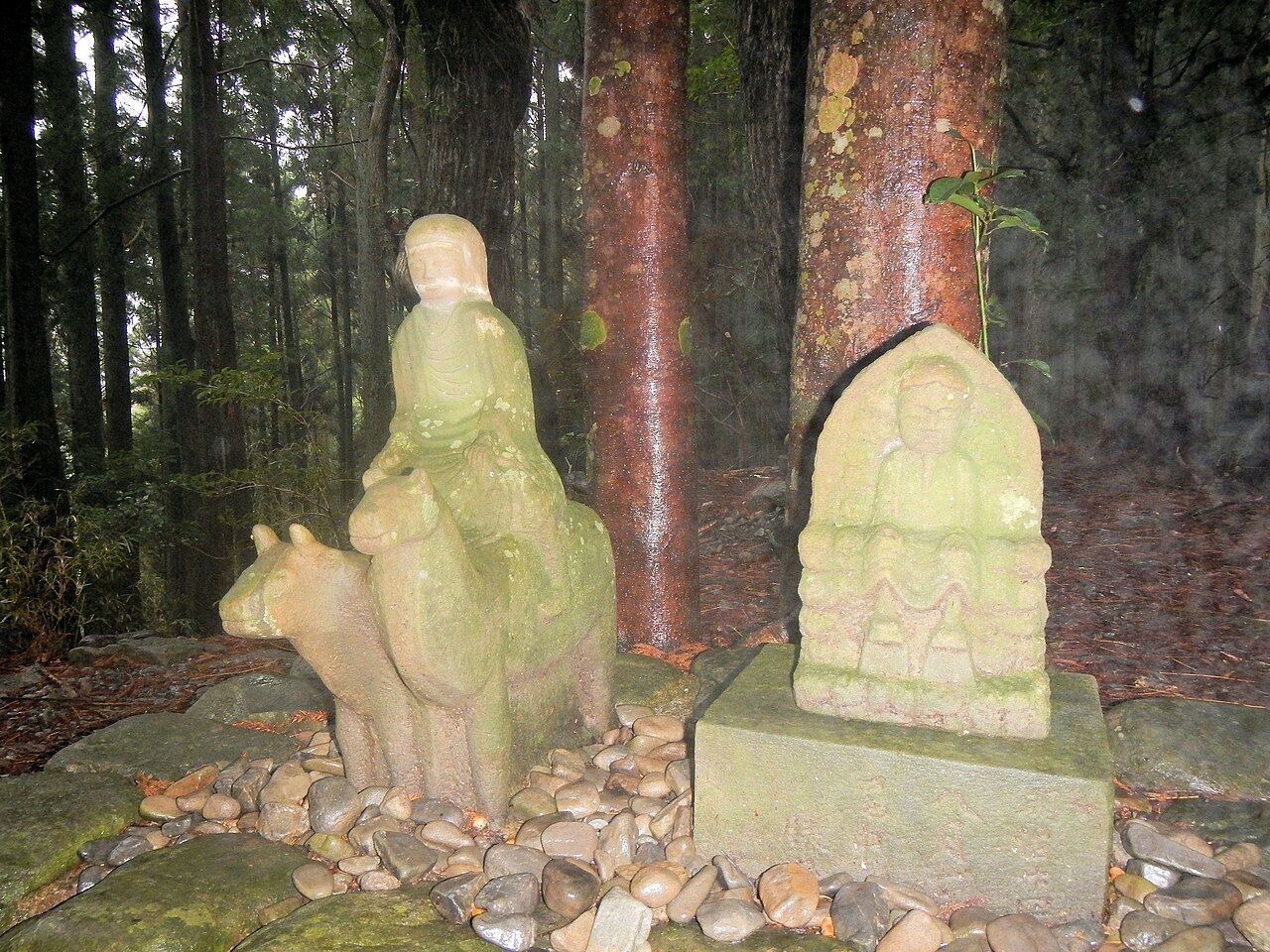
The Nakahechi gives the journey a structure, then lets the larger shrines carry the ceremony.
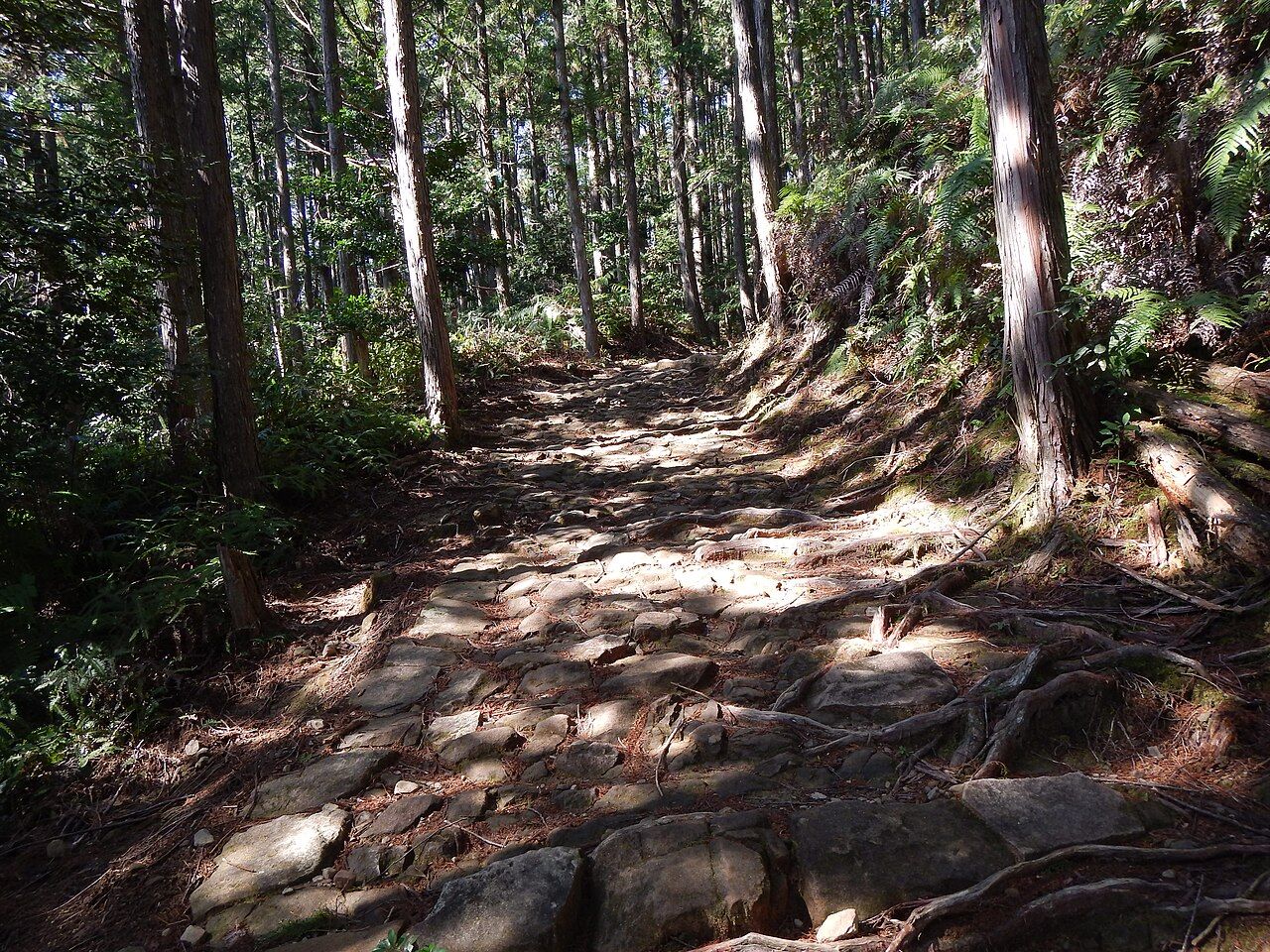
It begins at Takijiri-oji and reaches Kumano Hongu Taisha after about 38 km. That is a substantial enough line to give the route shape, without pretending the number tells the whole story. About 38 km is a clean figure, but not the whole case. The route’s interest comes from what it connects, rather than a distance made to sound heroic. The walk is travelled on foot, and its appeal lies partly in connecting the small oji with the larger destination. A thermos of tea suits this sort of journey: uncomplicated, steady, and not trying to steal the scene.
There are three Grand Shrines of Kumano: Kumano Hongu Taisha, Kumano Hayatama Taisha and Kumano Nachi Taisha. The name suggests a tidy set, but the story is more interesting when attention stays with the details. The Nakahechi reaches Hongu; the wider pilgrimage tradition gives the three shrines their place together. That distinction matters. A route does not need to claim every landmark to make its own argument.
Nachi Falls is the most arresting figure in the account. It drops 133 m and is the tallest single-drop waterfall in Japan. Those facts are enough; there is no need to pile on adjectives. The scale is striking precisely because the description stays exact. Against the patient work of walking between shrines, the falls provide a sharp change of emphasis. I like that contrast more than any attempt to make the route uniformly dramatic.
At Oyunohara, the history turns on a loss. Kumano Hongu Taisha stood on the river sandbank until a great flood in 1889. The shrine ground still matters, and the tall torii gives that fact a present marker. This is not simply an old site kept in the past tense. Its force comes from the gap between what stood there and what can still be recognised now.
In 2004, the Sacred Sites and Pilgrimage Routes in the Kii Mountain Range joined UNESCO’s World Heritage list. That recognition is useful context, rather than a reason by itself to walk. The better reason is the route’s combination of scale and specificity: a known starting point, subsidiary shrines, a destination with a complicated history, and a waterfall whose measure needs no embellishment.
There is also a connection beyond the route. Tanabe and Santiago de Compostela became sister cities in 1998. The comparison has an obvious pull for anyone interested in pilgrimage, though I would not flatten the two places into interchangeable versions of one idea. Other roads have their own character, from Japan's most famous walking journal to a pilgrim road from Porto and Scandinavia's old pilgrim path.
The Tanabe City Kumano Tourism Bureau publishes route maps for walkers in English. That is a useful, concrete piece of support, and more helpful here than grand claims about transformation. A thermos of tea remains the right imagined companion: not a solution to anything, just a small comfort beside a route whose strongest details already do the work.
The Nakahechi is worth the time for its clear-eyed mix of shrines, history and scale.