Pilgrim Ways
St Olav’s Way to Trondheim
A 640-kilometre pilgrim path runs from Oslo to Nidaros Cathedral, through Gudbrandsdalen and across the Dovrefjell plateau.
- Length
- about 640 km
- Usual time
- about 1 month
- Travelled
- on foot
Lake Mjøsa lies along the southern stretch of St Olav’s Way. North of it, the Gudbrandsdalen valley follows the River Gudbrandsdalslågen. The path runs from Oslo to Trondheim, crossing the high Dovrefjell plateau.
The change from lake to valley gives the opening shape. Then the plateau changes the scale of the walk.
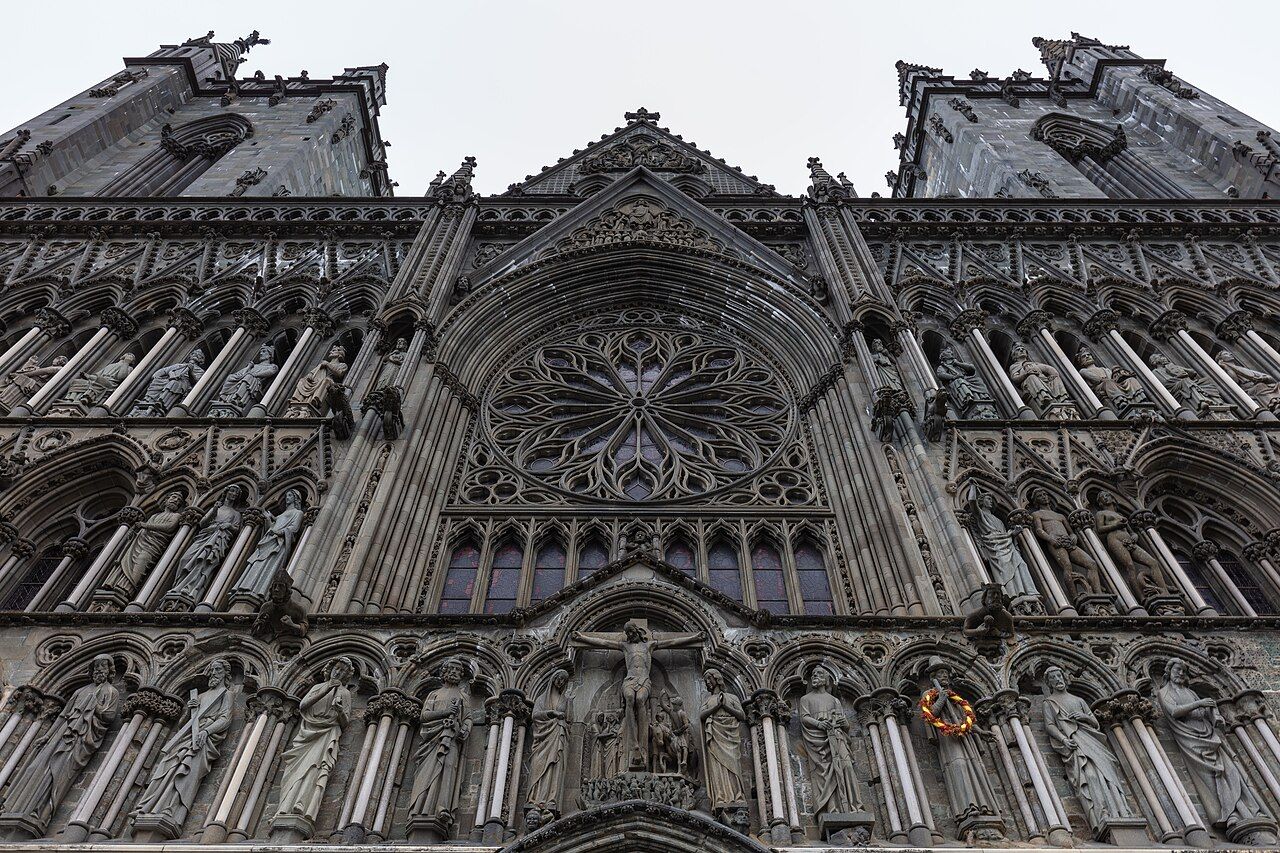
That gives the route a clear shape, and a reason to keep going. At its end stands Nidaros Cathedral, built over the grave of St Olav. The destination is not just a city finish. It is the point of the pilgrimage.
The route
King Olav Haraldsson was killed at the Battle of Stiklestad in 1030. He was soon venerated as a saint. The path was reopened as a marked pilgrim route in 1997, giving an old story a present-day line across Norway.
The numbers: about 640 km; on foot.
The Dovrefjell crossing is the route’s strongest change of scene. The plateau is home to a herd of musk oxen. A thermos of tea feels like the right companion for a long stretch on foot.
For a different Norwegian crossing, there is the high railway across Norway. St Olav’s Way asks for slower attention. Its pilgrim purpose also belongs in a conversation with the forest shrines of Kumano and a long Spanish coast walk.
Olsok, on 29 July, marks the anniversary of St Olav’s death. The date gives the route a firm point in the calendar, and ties its long walk back to the story behind it.
There is enough here to make the distance feel earned: river valley, mountain plateau, and a cathedral above a saint’s grave. I’d choose that purpose over a route that offers scenery alone.
That is why St Olav’s Way is worth the time.