Walking Writers
Bashō’s Narrow Road to the Deep North
Matsuo Bashō’s long walk north is best read through its stops: islands at Matsushima, summer grasses at Hiraizumi, and cicadas at Yamadera.
- Length
- about 2,400 km
- Usual time
- about 150 days
- Travelled
- on foot
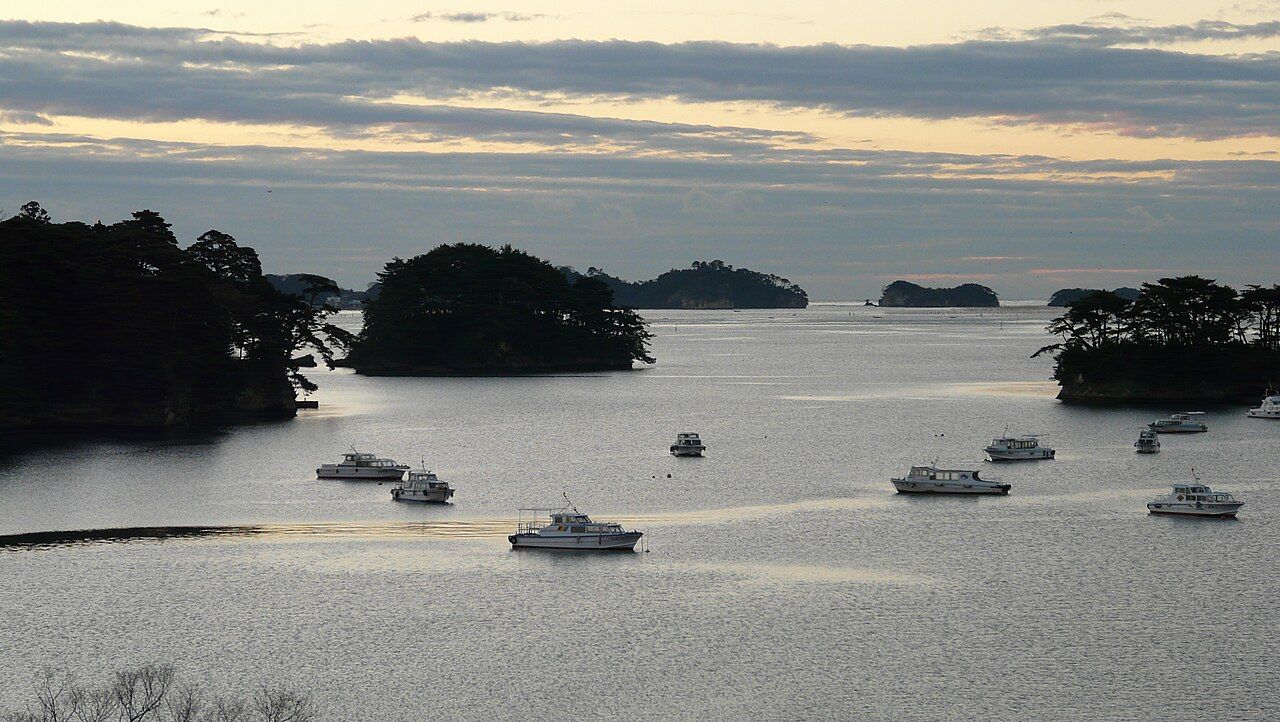
About 2,400 kilometres gives this journey its blunt scale. Matsuo Bashō set out from Edo in 1689, travelling north on foot. His companion was Kawai Sora, and the journey took about 150 days. That is a long walk, but distance alone isn’t the point. The route matters because Bashō made places memorable through what he wrote there.
The islands of Matsushima are among those stops. Bashō visited them, and that simple fact is enough to make the place part of the book’s pull. This is not a route story built around a checklist. It asks what a journey leaves behind, and the answer is often a brief image or sound. I prefer that economy to grand claims about travel changing a life.
There is a useful distinction between following a route and reading its record. Bashō’s journey belongs beside the old imperial pilgrimage as a path with literary weight, but its particular interest sits in the writing. The walk supplies the structure; the haiku give it staying power. A reader looking only for a catalogue of stops will miss the better reason to continue.
That is also why the story can sit comfortably beside the railway to Beijing. One phrase promises passage by rail; Bashō’s account is anchored in walking. The contrast is useful, not because one way of travelling wins, but because the pace changes what a journey can hold. Here, the stops are not incidental details.
The numbers: about 2,400 km; about 150 days; on foot.
Three stopping points
At Hiraizumi, Bashō wrote a haiku on the summer grasses where warriors had died. It is the sharpest meeting of place and memory in the facts of this route. The grasses are present; the warriors are gone. Bashō’s choice of image gives the stop more weight than a description of distance could manage.
UNESCO added Hiraizumi to its World Heritage list in 2011. That later recognition adds context, but it should not swallow the haiku. The writing already makes the visit matter on its own terms. I find the smaller detail more compelling than any label: summer grasses set against the absence Bashō names.
At Risshaku-ji, the mountain temple known as Yamadera, Bashō wrote about cicadas. His haiku describes their sound soaking into the rocks. It is an exact, strange image, and the route earns its place here. The sound does not sit above the landscape; in the poem, it seems to enter it. That is more memorable than another general claim about scenery.
The journey ended at Ōgaki, though the book’s life continued beyond the walk. Oku no Hosomichi was published in 1702, after Bashō’s death. That delay makes the finished work feel less like a travel diary and more like a shaped account. Its stops are real places named in the journey, but the writing decides which details endure.
That puts it in good company with a sister's record of walks: the walking matters, but so does the act of keeping a record. I like the modest scale of the evidence here. Islands, grasses, cicadas, rocks. No grand itinerary can improve those details, and a thermos of tea is better company than a stopwatch while reading them.
The route is long; the best parts are its sharply chosen details.
But Bashō’s strongest stops are Hiraizumi and Yamadera, where one image or sound carries the whole visit. The book’s plain achievement is not that it covers so much ground. It is that the ground keeps speaking after the journey ends.
Bashō makes this a walk worth reading, not merely measuring.