Pilgrim Ways
The Via Francigena at the Great St Bernard
From Canterbury to Rome, the Via Francigena finds its hardest test at the Great St Bernard Pass, where Sigeric’s record meets a long history of shelter.
- Length
- about 1,900 km
- Usual time
- about 3 months
- Travelled
- on foot
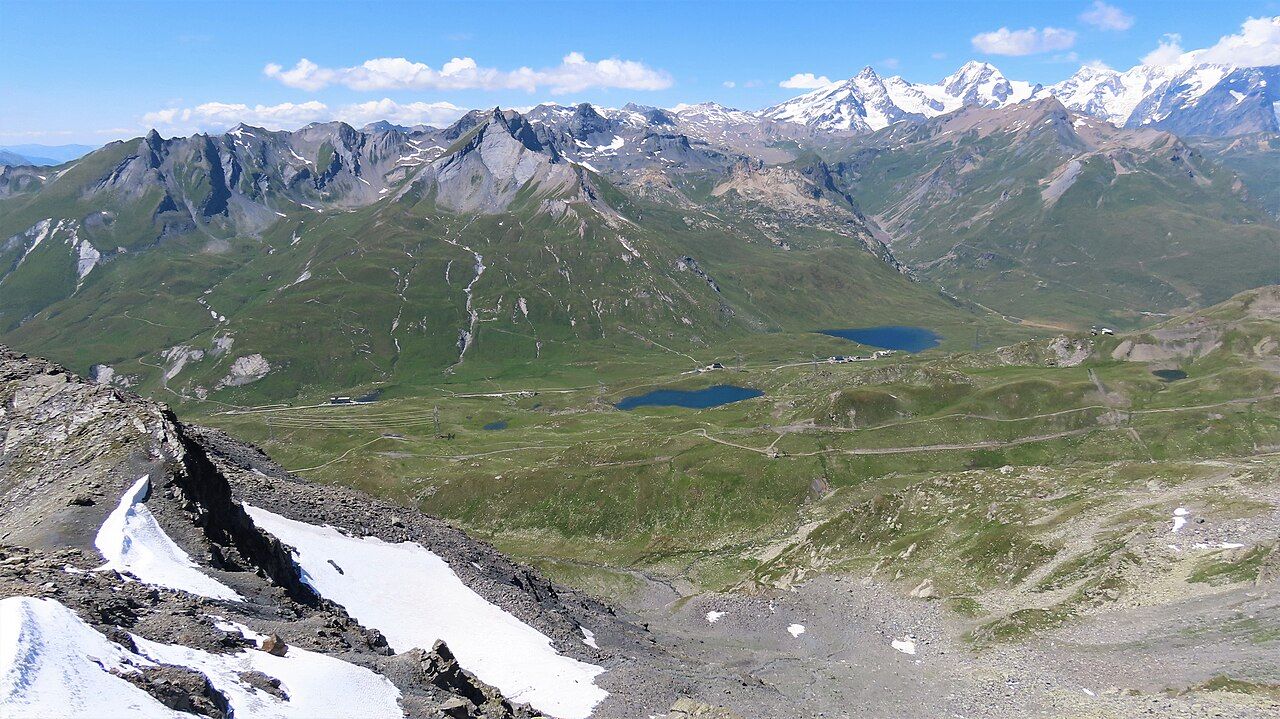
About 1,900 km separate Canterbury from Rome on foot. The Via Francigena makes that distance feel less abstract at the Great St Bernard Pass. This is the route’s highest point, and its hardest crossing. The road’s scale becomes plain here, rather than on a map.
There is a pleasing stubbornness to this pilgrim road. It crosses England, France, Switzerland and Italy, without reducing the journey to one famous stretch. The pass gives the whole route a centre of gravity. I’d rather linger over that crossing than skim past it as another line between two cities.
The thermos of tea is my preferred measure of a long walk: patience, not speed. The Great St Bernard asks for that kind of attention. It is not simply a high point to tick off. It gives the journey its most convincing test.
The record
Archbishop Sigeric of Canterbury recorded about 80 stages on his journey home from Rome. That was in about 990. His record gives the road an unusually human scale: a journey made in stages, rather than a single grand sweep. The detail matters more than the legend of a route linking two famous places.
It also sets up a useful contrast. The modern Via Francigena runs from Canterbury to Rome; Sigeric’s recorded journey went home from Rome. Their value is simpler: they make the road legible as a sequence of crossings and arrivals.
The route’s long reach can invite comparisons with other pilgrim roads. Spain's great pilgrim road is an easy point of reference, though the Francigena’s four-country span gives it a different character. I prefer the route when its own history stays in focus, rather than being treated as a rival tally of distance.
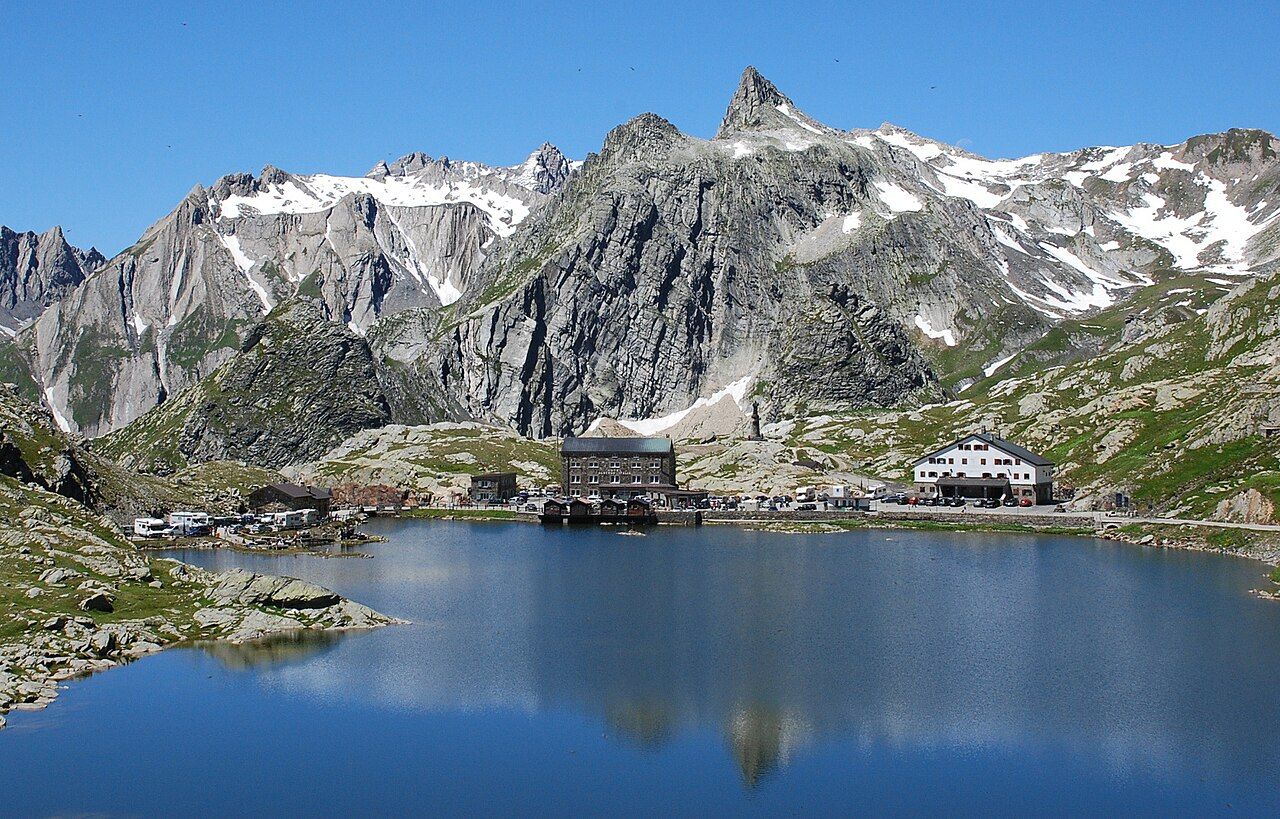
There is another useful comparison in the high walk through the Valais. The name points towards the same broad appeal of a high crossing. But the Great St Bernard is not only a pass on a walking route. Its hospice gives the place a second story, grounded in shelter.
The pass
The hospice was founded in about 1050 by Bernard of Menthon. It has sheltered travellers on the pass for nearly a thousand years. That history gives the crossing more substance than a height figure alone. A difficult point on a route becomes more memorable when shelter belongs to its story.
The canons of the hospice became famous for the rescue dogs that take the pass’s name. It is a striking part of the place’s identity, and an unusually direct link between the hospice and the crossing. There is no need to add a grander claim. The dogs’ reputation already carries enough weight.
The numbers: about 1,900 km; about 3 months; on foot. The highest point is 2,469 m. The Great St Bernard road is usually free of snow only from June to early October. Those figures explain why this is not a casual detail between easier chapters. Timing matters here, and the season is a narrow one.
The pass gives the whole road its hardest argument.
The pass gives the whole road its hardest argument.
The route was declared a Cultural Route of the Council of Europe in 1994. The European Association of the Via Francigena Ways promotes and marks it across the four countries. That work suits a route whose identity depends on connection, not one isolated stretch. Its appeal comes from holding the long line together.
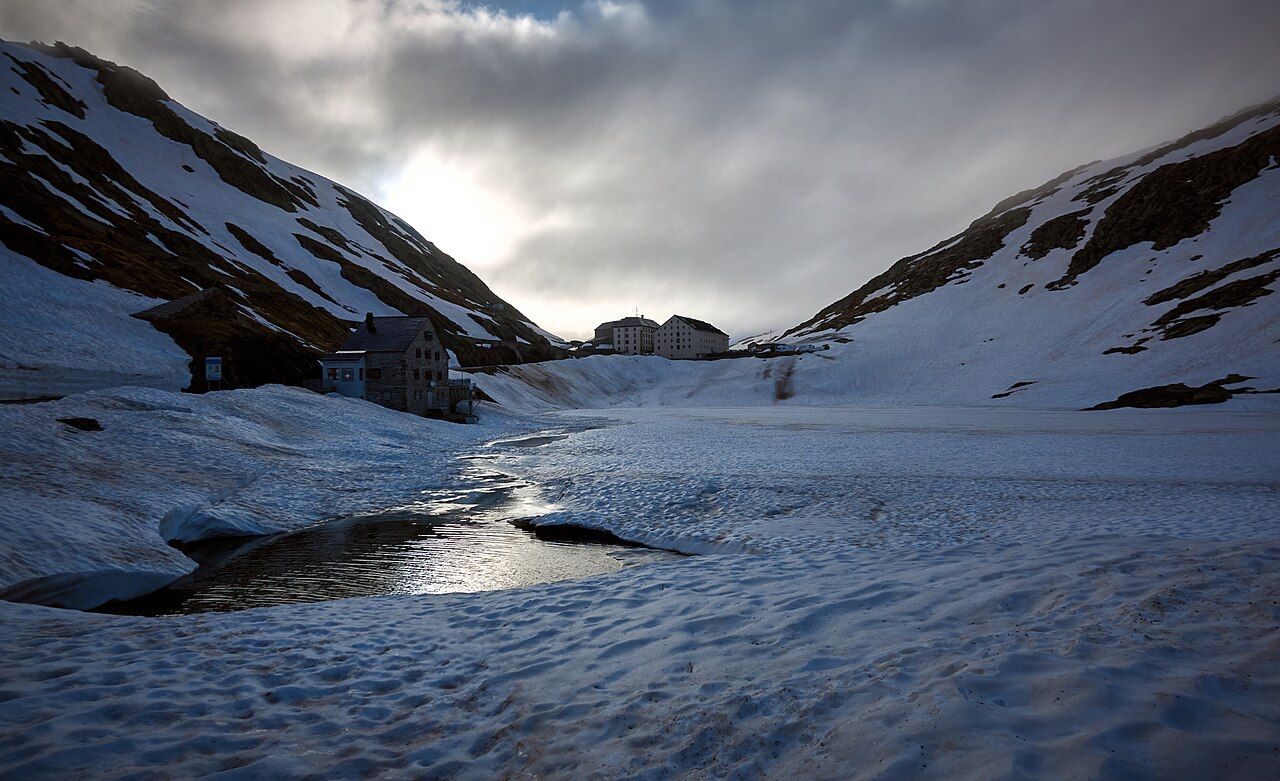
Still, the pass is where the line becomes most persuasive. The crossing has a clear physical high point, a long-standing hospice, and a season shaped by snow. Those are solid reasons to give it proper space in the story. They make the Via Francigena more than a route name stretched between Canterbury and Rome.
It is worth resisting the urge to turn every part of the road into a highlight. The Great St Bernard already earns its place without inflated language. It is the highest point, a hard crossing, and a place associated with shelter. That is a strong enough case for stopping the narrative here.
Beyond the crossing
Below the pass on the Italian side lies Aosta, with a Roman arch and theatre. The contrast gives the crossing a sharper edge: the road descends towards a place with visible Roman remains. I like that the route’s history does not sit in one tidy period. Sigeric, the hospice and Aosta each offer a different measure of time.
The road also has chapters far from this high point, including the Tuscan stages to Siena. That is useful context, not a reason to hurry away from the pass. The route’s length depends on its variety, while its hardest crossing gives the story a firm centre.
The Great St Bernard is a severe measure of what the Via Francigena asks. About 3 months on foot is a substantial commitment, and the pass gives that commitment a memorable shape. I would not sell the whole road on altitude alone. The better case is the combination of Sigeric’s record, the hospice, and the crossing itself.
For me, the Great St Bernard is the Via Francigena at its most convincing.